Blog

  • Blowing in the Wind

    Blowing in the Wind

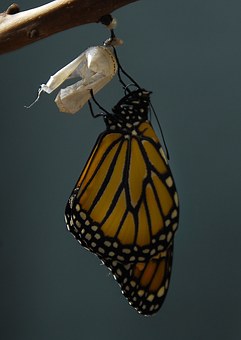
    My daughter recently told me that on her way to work she noticed a caterpillar on a too-long strand trying to weave a cocoon in the wind, causing it to struggle. The image of that cocoon shifting in the wind kept popping into my head, perhaps because I’ve felt very much like it lately—the winds of life whipping me one way and then another: uncertainty in my future direction, inability to keep a pace I would wish to, not hearing my own voice amidst the cacophony of others’ voices, and worst of all, the wind of fear that I won’t settle. All this while I work to spin a cocoon that will protect me from those very winds and allow growth. But my strand is also too long, and I am vulnerable. I need to shorten the strand between the sources of my security and me.

    A major source of that security is my faith. I can’t speak for others, but without God’s voice in my ear, the future feels bleak and my past losses overwhelming. He has purpose for my life, and in order to meet that purpose, I need to stay close to Him. My primary connection strand is prayer—not so much a formal exercise as a constant conversation. My creativity, direction, and voice hinge on His creation, and the image of that caterpillar reminds me to keep the strand of prayer strong and attached close to Him.

    From the day we are born, we need human connection. It’s the way I’m wired and a source of security for me. Unless I give and receive support from family and friends and share burdens, getting through this proverbial vale of tears feels impossible. Both the sharer and receiver are blessed by the connection experience. Friends have seen me through devastating days and celebrated with me through joy-filled days. My hope is that they feel the same. I must continue to nurture those connections.

    As I get older, the significance of my connection to nature grows clearer. It resounds in my writing and becomes a source of understanding myself. When my daughter informed me of her long hours at work, I reminded her of the advice her grandfather gave me: “Don’t forget to smell the flowers.” Dad reminded me that the lessons in nature require me to slow down long enough to take notice, learn and enjoy. Unlike most Coloradoans, I am not particularly an outdoor person; however, I must again make the effort to keep my connection to and appreciation of nature strong.

    I’m privileged to have an encouraging and accommodating husband, as well as children and grandchildren. Some years back, when the kiddos were preparing for college, I wrote the following poem. It speaks to the mother/daughter connection, considered the most complicated. I compared her growing process to the evolution of a caterpillar to cocoon and butterfly.

    Daughter

    A swiftly-evolving future butterfly,
    you had no choice
    but to shed your too-small skin.
    It hurt, but new lived where
    old gave way and, nearly grown,
    you wove your soft blanket
    into a hard, brown shell.
    Clinging with one thin, silk strand,
    you stubbornly attached
    to the mother stem.

    Inside, you changed,
    melting down to a formless state
    where all new things begin again,
    unnoticed until the world
    would see you fly.
    Shaping silently in the cocoon,
    you tossed and turned,
    keeping time
    with your own nature
    until the day you came forth.

    Bold wings took hold,
    strong and colorful,
    carried you over the winds of time,
    until you landed
    just outside my window.

    –Laurel Jean Becker
    Copyright 9/5/97

    I now feel like the caterpillar needing to melt down, reform and redirect—not an easy process. But I know if I keep my vital connections strong, I will eventually find my wings again.

  • Packing Light

    Packing Light

    Okay, I admit it. I’m notorious for packing the proverbial kitchen sink. When I hear the term “packing light,” I can’t help but smile. I’ve worked hard to become efficient at packing, and it’s taken a long time. Fear of the unknown necessitated that I pack for every eventuality–a behavior rooted in insecurity. Heaven forbid I find myself in an unfamiliar place without some small item like my personal shampoo or a bottle of Tylenol. No matter where we are heading, my husband now reminds me, “If we forgot anything, we can always purchase it.” It’s finally sinking in!

    Packing light when it comes to emotional baggage requires letting go of resentments, hurts or sadness. This kind of light packing I am accustomed to after years of life and loss. Dragging around unnecessary emotions allows them to weigh us down and hold us back. I deal with them and let go. This is much easier said than done, as I can attest to; but it is an imperative ingredient for a well-balanced life. To jettison is to discover freedom. Emotional baggage is like a person with a rope trying to haul a train down a track. I cannot afford this. I also cannot afford to allow the news of the day to worm its way into my head and cause turmoil. With all the misinformation put out by political fear mongers on both sides of the aisle, this can easily happen. My plate overflows with things I can do something about without allowing myself to be burdened with things over which I have no control. They take all the fun out of life. Let’s face it, existence in this world is difficult, and I believe in enjoying life as much as possible while I’m still able.

    Despite overpacking when I travel, I willingly rid myself of any nonessentials in my home. What I retain must meet one of three requirements: It is something I use or will soon use, is a family heirloom, or brings a smile to my face and warmth to my soul. If it doesn’t meet one of these three, I am anxious to find it a new home or throw it out. This keeps my home uncluttered and as functional as the space will allow.

    As I am learning not to overpack for travel, I want to continue uncluttering my daily life so it reflects a simplicity that is easy to live with. The following poem was written a few years ago. On occasion, I drag it out and re-read it in order to remind myself to continue to pack light–when traveling, carrying emotional baggage or in my home.

    Copyright 2/2/18
    Laurel Jean Becker


    Pruning in Late Summer

    I pad my knees against the ground’s small stones
    and deftly lean toward my garden flowers.
    It’s time again to prune the old spent buds,
    while holding hope for more late summer blooms.

    I gently cut each failing summer shoot,
    reflecting on my own pale, withered sprigs.
    They clutter life and slow my cautious steps
    toward newer goals and long-held childhood dreams.

    I seize this chance to simplify my world
    and jettison unnecessary work.
    Say no to life I do not yearn to live;
    make room to sow experimental seeds.

    I rid myself of those who jar my life,
    and make me feel I’m planted in loose sand.
    Requiring all my dwindling energy,
    they sprout fresh needs I cannot satisfy.

    Take time to grieve about a few lost blooms—
    the unmet aspirations of my youth—
    replaced by random, unexpected boughs
    that redirect my paths and energy.

    Release the goals that flooded yesterday.
    Tomorrow brings its own vibrant rewards.
    Time lends itself to future borrowers
    who focus on potential garden growth.

    I’m cautious not to sever healthy leaves
    so that the shrub endures no pointless loss
    of needed strength before first winter’s blast
    when sudden chills forecast a dormant life.

    Yet some small, lucky flowers get to stay,
    the ones bloomed late whose colors did not fade.

    Previously Published
    In the Heart of a Quiet Garden, Finishing Line Press
    Copyright 2013 Laurel Jean Becker

  • Dealing With My Inner Editor

    Dealing With My Inner Editor

    Those of you who understand a love/hate relationship will know what I’m talking about when I share that my inner editor is both loved and hated—and often at the same time.

    A writer’s inner editor is part of the executive function and self-regulation of the brain. Children aren’t born with these skills, but they are born with the potential to develop them. The full range of abilities continues to grow and mature through the teen years and into early adulthood (hopefully).

    My inner editor resembles a Type A personality. What made her so strong? A love for the written word? A desire that everything be on target all the time? A need for accomplishment or recognition? Trying to outperform my latest work? It might be any of these. Or it might be none of them. It’s hard to tell, but she continues to get reinforced.

    Fact is, I love my internal editor as long as she remembers her place by improving my writing through critique group editing, learning new techniques and deciding when and when not to use literary license. She also eliminates writing that does not further plot, tightens the work by losing unnecessary wordiness, describing settings, checking historical information and assigning character traits to enlarge personality.

    Love turns to hate when she gets in the way of creativity. I hate it when she interrupts to add a semi-colon or change a word when I struggle to write a first draft. She gets in my way when I read for pleasure by finding different ways to express the writers’ thoughts or wanting to rewrite a character. I think she has an arrogant streak. She just can’t stop being a real pest! When I fall asleep while reading, I dream about rewriting the last paragraph that I read. Seems she doesn’t need rest. Occasionally, after I have finished and published a piece, she glances through it to find ways I might improve it—too late. I note any error, hoping that others will pass over it and leave it unnoticed. Occasionally my heart sinks until I persuade myself that being imperfect only makes me human and lovable to my readers (?). 

    At these times, I need to say, “Put a sock in it. I can’t change it now, so get over it!” That can quiet her—at least for the moment. My internal editor needs kind discipline. She needs to know she is important without having to run the show all the time. I literally talk to her when I need her to be quiet, saying, “Okay, you need to let me be while I do this.” A bit schizophrenic of me, but it works.

    On the other hand, I love my internal editor when she encourages me to learn from others. I appreciate her when something inappropriate runs rampant through my mind but fails to be expressed by my mouth or on the page. I concur with her when I want to send that cranky email but she thinks better of it. I love her when she embraces my own writing with “Hey, not bad!” She is an important part of myself, and I will continue to love and hate her.

  • Barren Branches

    Barren Branches

    I glanced out my window at a beautiful sky. The sun was setting and the combination of cloud effect and angle of rays brought a rose softness to everything—as if the air itself were tinted. I went outside to experience the beauty. Rolls of clouds wound from one end of the sky to the other and one behind the other, like waves on a beach, acting as prisms to the light from the sun.

    Gazing up, I noticed the barren tree limbs plastered black against mauve and pink clouds. Not a leaf. Not a bud. No sign of life—as if they were forever dead. The contrast took my breath away. I wish I identified with the colorful sky and warm air, but truth be told, I felt like the barren branches reaching for the light. Shortly, everything returned to the usual dusk grey and the branches blended into the sky. For the rest of the evening and ever since I’ve been unable to shake the image of the tree limbs against the colorful clouds, knowing it held a message for me: an internal awareness of my own barrenness and the spiritual life I missed and yearned for.

    The last few weeks, my days have been full of deadlines: speaking engagements and the necessary preparation, the effort to keep up with the bare minimum in my home obligations and financial responsibilities, book signings and media marketing. These opportunities make me feel blessed, but I miss writing, prayer and meditation time—and puttering around my home. When I lose my spiritual and creative rudder, I am disengaged from my Creator and myself.

    There is only one thing to do: find my balance again and rededicate my days and time to God’s will for my life. Not that I discontinue speaking and marketing. However, I need to daily set aside time to empty my mind of pressure and open it to God’s voice. It strikes me that I often go through this process. Every few months since my latest book, I find myself untethered, and something like the barren branches comes along and reminds me to slow down and reconnect—this time not only on a creative but also a spiritual level.

    While writing this, an image of a leaf-filled tree and bright sunshine entered my head and left as fast as it came. Leaves appeared on my mental branches–a signal to myself that I am on the right track. I must judiciously nurture both my creative and eternal self.

    Experiencing the beautiful sky and warm colors leaves me feeling grateful; but I am also grateful for the empty branches and the stark contrast they bring to the picture. Without the one, I would not have noticed the other. It’s funny, isn’t it, how we learn a great deal from the experience of contrast. This contrast is a gift—a reminder of the necessity of regaining my balance and leafing out my barren branches.

  • Never Hang Up Your Dancing Shoes

    Never Hang Up Your Dancing Shoes

    Last night I dreamed I was dancing again. At one point, Randy and I were dancing together. In reality, Randy doesn’t dance, but it’s my dream, and I can dream what I want. Woke up feeling refreshed and happy.

    Most people don’t know that I danced as a young woman—ballet, ballroom, line dancing, Texas two-step—anything that my dates could or would put up with. Shortly after we were married Randy agreed to go with me  to the Grizzly Rose to find out if he might enjoy two stepping, but he was a man of his generation, and dancing for him was only free style to rock music. As a result of physical losses that come with age, I can’t dance like I once did. One might think I’d wake up sad; however, this morning the opposite was true. I’ve never stopped dancing. Only now, it is in a different form: home making, baking, grandparenting and writing are just a few.

    Instead of the physical, I now dance the emotional and spiritual steps, keeping time with my muse and writing whenever I can. Like Ginger Rogers with Fred Astaire, my muse partners with fictional characters and dances around story until she glides through my mind, out my fingers and onto the page. When people ask where my ideas come from, I shrug my shoulders and turn my palms upward in an “I don’t know” pose. That’s a lie. When my muse begins to dance, it is a reflection of God’s creativity, and I have spent a lifetime dancing with Him.

    Keeping spiritually limber helps me to dance around corners in a rapidly changing world. Raising children and grandparenting requires flexibility. Because my own childhood was devastating and neither parenting nor grandparenting tapes were available–or appropriate–please excuse the mixed metaphor when I tell you I flew by the seat of my pants.

    Slow dancing through housework is cathartic.  Taking my time allows my brain to float free–revisiting whatever subjects and events dance through my mind.  Although I get occasional help with the house, people think it crazy when I tell them I prefer to do it myself.  Over the last few years my baking and cooking skills improved.  Now I volunteer for bakes sales, experiment with recipes and bake with the grandchildren.

    When God tells me to dance to a new tune, I am ready though not always willing. After considerable rebellion, I am now doing the marketing dance with my book. It is a challenge as the marketing world is changing exponentially. Each day, overloaded with work, I remind myself that I will eventually glide into it with confidence–as I once did with ballet.

    I’ll need to learn more new dances in the future. Hopefully my aging dance will be graceful. Years ago, my friend, Jan, gave me a tiny picture of a pair of ballet slippers. Below the picture it read, “Never hang up your dancing shoes.” I hadn’t danced in years, and Jan knew that. But the message encompassed more than the physical, and I knew that, too.  Each in our own way, we all need to keep dancing.

    As hard as it is to learn new steps, be willing to fail, and make a fool of myself in front of others (which happens more than I like), I will keep dancing.

  • Box Canyon

    Box Canyon

    Remember when western movies and TV shows about cowboys were popular? Box canyons were an expedient part of the plot. They have steep walls on three sides, allowing access and escape only through the mouth of the canyon or by climbing its walls. Actually, box canyons were used in the American west as convenient corrals with only the entrance fenced.

    In the movies or on TV, the good guys chased the bad guys into a box canyon and apprehended them, or the bad guys lured the good guys into the canyon, where riflemen posted on the walls of the cliffs tried to “pick them off.” Escape? Impossible! But only for the bad guys. If the unsuspecting heroes entered the box canyon, they always found a way out—either by reversing their path or climbing the steep walls.

    I’ve been stuck in my own box canyons. I’ve confidently followed a path until I found myself unable to go forward and unwilling to go backward. Often, the canyon walls were steep and I too tired and my load too heavy to climb. Eventually, I searched my mental saddlebag and came up with a solution.

    When in my late teens, I wanted a place of my own. However, my mother insisted I live at home until married—very old-fashioned. I refused to “tie the knot” to leave home. At first, I felt paralyzed and boxed in. No decision would be pleasant. It took a while, but I finally discarded the restraints of my mother’s message and found a place of my own. Of course, I felt her considerable disapproval in the process, but I knew it was best for me, and I did it anyway. I escaped that box canyon.

    Another box canyon arose later when I considered marriage. My childhood church taught that men were both the physical and spiritual heads of the home. I didn’t want anyone to be my head—spiritual or otherwise. I decided I wouldn’t marry at all if it meant giving up my individuality. Luckily, I eventually found a Christian man who believed in partnership—not headship. That fit my philosophy to a tee, and out of the canyon I rode.

    Leaving a box canyon often takes more than one try. In my early 20’s , I worked in the health care industry. When I heard of a challenging job opening within the company that would give me a promotion with more pay, I applied. The executive director told me in no uncertain terms that I had neither the personality nor the background to handle the job. She hired someone else. That employee quit within weeks after discovering the work too difficult. I applied again and received the same answer. She hired yet another person. That person went home ill and didn’t come back. I applied again, this time suggesting that the way she was handling it wasn’t working and maybe she should reconsider hiring me. She finally gave in and chose me with the stipulation that it was a three-month trial. I dived in (or climbed out) and kept that position for a few years.

    With my new book coming out and another in the making, I’m now in a creative box canyon. To climb out, I must lighten my load. I must drop all unnecessary things from my saddlebag (overscheduling, not delegating, saying “yes” to what I don’t have time for). Only then can I escape. I am seeking help with my website and marketing management. I plan to meet with publishing professionals in the near future in order to free my time from other business aspects of writing. I’ve also hired help with the house, and I am taking care not to overload my calendar. I’m part way up the canyon walls now. Hopefully, the bad guys (discouragement, defeat and delay) won’t “pick me off” before I can climb out of this box canyon and be able to hear my muse.

    Box canyons afford an opportunity for growth and change. Life presents many of them to all of us, and with each we have opportunity to find our paths and values–and to listen to our inner voices. Experiencing boxed canyons and finding a way out is difficult. Some I have handled well–others not as well. However, I have found them all to be beneficial.

  • Taking Control

    Taking Control

    This week, I discovered something new about myself.  I know, I know, I’m old enough that everything about myself should already have been not only discovered, but patented.

    Recently, I spoke to my husband about my unhappiness, while at the same time reassuring him that he is not the source of it.  However, after several months of unhappiness resurfacing, I still hadn’t found the cause. I’m a big believer in finding one’s own bliss.  No one else is responsible for it.  However, the practice of demanding constant happiness is not only a waste of effort that can lead into troublesome places, but also the source of its own angst.

    So I decided to forget about being happy and focus on my other problems: time management and my book business.  I didn’t have enough time or discipline to put my marketing/writing first.  This has not always been the case.  While writing my latest book, I put 3-4 hours per day into finishing it.  But that was a while back.  Still, any connection between this lack of time management and my source of unhappiness never entered my mind.

    A few weeks ago, I told my husband that others impacted and even controlled my schedule.  Also, it was no one’s fault but my own.  I told him that from now on, I wanted to work from 8 a.m. to 12 noon on my writing and marketing.  I would devote early mornings to self care (considerable time at my age 😦) and afternoons to everything else.  Randy listened to my plan and suggested I not carve out that much time for my new work schedule.  He reminded me that I, an optimist, tend to bite off more than I can chew and get discouraged.

    After considering his advice, I decided to cut the four hours in half.  Instead, I chose to work from 10 a.m. to 12 noon, adding another hour in a few weeks.  Randy thought it a good idea.

    And something happened!  I found the cause of my unhappiness and discovered a source of satisfaction that I wasn’t aware of before. I needed to go to work, to report into my office as if to a job outside the home.   Writing is an artistic endeavor and marketing a time-consuming, left-brain activity.  I prioritized both after home making, cooking, errands, bill paying, gardening, husband, children and grandchildren.  Outside of my hubby, kids and grandkids—who will always be my first priority—the writing/marketing needed to come next.  But I treated it as less important.  The result was anxiety over unaccomplished projects and unhappiness over a lack of control of my own life.

    Control brings to mind a lot of negative connotations:  Images of people who want power over others, abusers, etc.  However, taking control of oneself, one’s life and schedule is a good thing.  I am happier these last few weeks than I have been for several months.  Let’s face it, I like being in control.


  • Beginning…

    Beginning…

    …again. I wonder how a writer who has written for so long can be hesitant to continue. No matter how many years I’ve done this, a new writing project brings up the same anxieties: an insistence that I “cook” the material longer—in order to delay beginning; a lack of confidence in my ability to accomplish the project; not knowing how or where my characters will lead; wondering how long the project will take and whether it will be publishable.

    Beginning is terrible. That’s all there is to it. Once I start writing, I experience the same anxieties but to a lesser degree each morning until, after several days, they cease entirely. I’m not alone in my misery. I know other writers suffer the same self-defeating thoughts. Regardless, I still must put my seat in the chair and write.

    Believe me, it’s not a glamorous life. People tell me how exciting it must be that I’m an author and how much they want to write a book. They don’t have a clue about the writing life and what it demands. It’s like saying, “Someday I’d like to be in a Broadway musical.” Most never go beyond thinking about it. To those who do understand what might be involved, I say, “Well, do it then! Stop talking about it.” I think the writer in me—the miserable one—wants as much company as possible.

    There are days in this writing life when I throw my hands up in holy horror and say to myself, This is ridiculous! Writing is torture, and I’m sick of it! Those are days when I spend a great deal of time getting very little done. A different life—one without writing—appeals to me. I want to dedicate my efforts elsewhere: catch up on homemaking and gardening, spend time with husband, children, grandchildren and friends. But before a few weeks pass, my mind starts writing without me. I dream sequential scenes of a story. An unsettled feeling that something is missing overwhelms me. Other interests begin to bore me, and while doing them, I feel wasted and misdirected. I start rewriting others’ books in my head—while I’m reading them. My emotional outlet is missing, and those closest to me can tell. 😦 Finally, I open my office doors, as well as my mind, to begin again.

    A different me opens those doors every morning. Sometimes, I clench the door handle like it’s a sword and I’m going to do battle. Sometimes I open them wide, as if to let in a breath of fresh air. At times I get a knot in my stomach when I pass over the threshold. However, once I start a new writing project and my anxieties recede, I can’t wait to open my office doors and find out where the writing leads. My author legs are back under me, two hours pass like 20 minutes and I must admit I am enjoying myself.

    Ain’t that a kick?          


  • Memories of Boat Bobbing

    Memories of Boat Bobbing

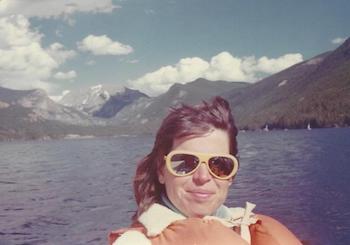
    Yesterday morning, as my husband emptied the dishwasher, he suddenly said, “Remember boat bobbing?”  A smile immediately came to my face as I swayed with the remembered motion of our boat bobbing up and down with the movement of the water.  What brought this to mind was that we woke to a soft, gentle rain encouraging us both to consider curling up with a real page-turner.

    “Remember the sun on our faces, a good book and a bottle of wine?”

    How could I forget?  Many of our friends liked to travel on their anniversaries—or at least do something exciting.  But to us, there was no better way to spend it than our annual ritual of boat bobbing. When our anniversary rolled around, a family friend offered her cabin on Grand Lake.  We went every year. When our children were born, we left the little ones–too young to take–with the Randy’s parents.  Then we’d head to our get-away.

    In the morning, I would pull Randy around the lake and he’d ski until he was exhausted.  He never fell.  Said falling in the cold mountain water was not permissible—even in the summer.  Instead, I’d pull him near the dock and he’d glide in.

    We’d spend afternoons boat bobbing out in the center of the lake.  We’d lie on the bottom of the boat and read–sometimes separately and sometimes to each other. Occasionally, I would drift into sleep with the book collapsed on my chest.  Yesterday morning I recalled the simultaneous feeling of both the cool mountain air and warm sun on my face.

    Once in a while, another boater would come by to inquire about our seemingly empty boat.  We’d take time to reassure him and thank him for his concern before returning to our books and bobbing. Intermittently, one of us would lift a head out of the book and prop up on one elbow to notice whether we were getting too close to the shore.

    “I remember once there was a fishing line,” Randy said.

    “I remember,” I said chuckling at this memory.  One year we decided to hang a line over the boat and see if we could catch our dinner.  Eventually, the line bobbed up and down as a poor little fish tried to rescue itself from our meal.  We reeled her in to realize how small she was and how neither of us wanted to kill or clean her–or any other fish.  We laughed at what poor fishermen we were, unhooked her and sent her back to her family.

    Deciding we would make things look like we were fishing in order to avoid inquisitive boaters, we put the line back in the water with a weight and no hook. We never took the fishing pole again, though—just the good books and the bottle of wine.

  • The Cemeterian

    The Cemeterian

    Recently, my favorite TV show, Sunday Morning, featured a segment on a cleaning professional who spends his days off from work cleaning the tombstones of our veterans. He then researches their lives and posts their stories on his website. He loves bringing these veterans back to life.  What a remarkable man!

    I began to get tears in my eyes. This man spends his day off cleaning the tombstones of those he will never meet. He wants desperately to honor them. He is the most patriotic, remarkable man I’ve heard of in some time. My tears were tears of gratitude for people like him in our world.

    The program inspired me to consider where I might better serve others. But what skills do I have that are of a lasting value? Immediately, writing comes to mind. I see it less as a contribution than a compulsion, a way to share my ideas and thinking, a way to heal the pain in my own life. Yes, I hope that what I write might also help others, but the dedication of this cemetary man dwarfs my own contributions.

    When I look back on my own life, I see that small kindnesses made a big difference in my world.  When I was a child in the early in the 1950’s, I spent a night with an African-American couple who fed me soup, bathed me, washed my hair and allowed me to sleep in their only bed. They lived down by the river, and I wandered onto their small property unable to speak, having been through one of many traumatic incidents. I never forgot the nourishment they gave me, and I still think of them when I prepare homemade soup for my family. They surely didn’t know this one gesture would impact my life and guide the way I would treat others.

    I realize that I may not be able to make as large a contribution as the cemeterian; however, I can still make a big difference in small ways. There are many organizations that help others, and I can support them. It’s not as personal, but it is a way to contribute. When I smile at a stranger, send get-well or birthday cards, prepare a meal for people who cannot or listen to others’ problems, I am making a difference.   I also keep my website and Facebook page positive and tweet only constructive ideas and good things about people. I am reminded of the old saying, “If you can’t say something nice, don’t say anything at all.” These efforts may not be as grand a gesture as the Cemeterian, but they count.

    Practiced daily, positive gestures add up to a big difference in my corner of the world. After all, that is the only corner I can affect.  We never know when we express kindness that we might be making a lasting impression, as did the kind couple of my childhood–and the cemeterian.