Blog

  • Switching Places

    Switching Places

    Last night I dreamed I was renting a room in a boarding house. Another woman was renting a larger space across the hall. She came to me and offered to switch rooms. I thought it would be nice to have more space; however, I realized how cozy I felt in my warm, inviting room with its lovely fireplace, desk, and bookcase. The larger room was not cozy. I felt a bit of a conundrum, but I woke not having switched rooms.

    This dream was a classic “the grass is greener” message telling me that, although I considered switching, I liked my own room too much to exchange places. When seeing another’s home or possessions, my husband’s grandmother used to say, “No now, I like mine best.” It’s been a family saying ever since, and I often smile when I think of it. My mother-in-law used to say, “I suffer from contentment,” as though it were an illness. Some would consider it just that, as if contentment were the enemy of achievement rather than the opposite of discontent.

    To those living under or near the poverty line or dealing with health issues, discontent is understandable. In that situation, the struggle for health and life’s basic needs is often painful and exhausting. For the rest of us, discontent can cause problems—especially in relationships. It can lead to comparison, which is not healthy and can result in continuous unhappiness and reinforce low self-esteem. Comparison can also lead to competition and envy, which is not compatible with support and kindness in a relationship. No matter how much we own, there will always be those who have more. In my experience, everyone struggles in this world. Those who have more materially struggle too—in different, invisible, ways.

    I am lucky all my needs are met, and I have very few wants. Perhaps I feel fortunate because of the contrast between my present and my past. I was an abused child, not fed properly, not cared for, and often cold. And those in responsible positions were the worst offenders. That is why I am now grateful for all God has given me. Still, I am human and envy occasionally crosses my mind; however, I am blessed in that envy is a feeling I rarely experience.

    More important to me than possessions are goals and purpose. They make my existence worthwhile and the daily struggle and demands of life bearable. I look forward to writing, and when I write, the time flies. Being an author, and all it entails, is an enormous challenge and also a source of joy. Caring for my family and myself properly continues to be fulfilling. Spending time with and making myself available to my friends is a high priority. Like my mother-in-law, I suffer from contentment. I may think about it for a moment, but I inevitably decide I don’t need or want a bigger room.

  • A Star Atop My Christmas Tree

    A Star Atop My Christmas Tree

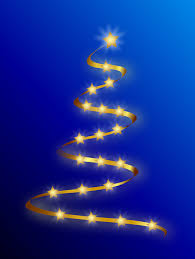
    This concrete poem expresses how I feel about this Holy season.  My faith in God and His peace, family and you, my friends, are all a blessing in my life and part of the base that holds it all up.   I am grateful for each and every one.


    Copyright October 20, 2010
    Laurel Jean Becker
  • Writing Made Me My Own Best Friend 

    Writing Made Me My Own Best Friend 

    “Dear Diary:” When I was young, I had one of those lock-and-key diaries. Writing in it was like writing a letter to a trusted confidant. Even now, I hold an image of an affectionate reader in my mind when I write. That reader feels like a friend, and writing has always been my friend as well. I remember being enamored making marks on paper before I knew how to make letters. Personal experience has taught me that people who do this writing thing need it so desperately that stopping might mean extinction. “I write, therefore I am” may apply here.

    I grew up in total abusive chaos, and I knew that as long as I expressed myself on paper, I was still viable. Conveying my thoughts, emotions, observations and personal truths by writing gave me—and still gives me—a friend to talk to and visual proof of existence—of my identity. Being an author and practicing the art of writing reinforce that identity—and the friendship. I can meet this special friend anywhere—in my office, on a park bench, in a coffee house, or while traveling. She is available any time, and always hears and clarifies my thoughts, hopes and dreams.

    Writing is an addictive relationship—in the sense that I am driven to do it. However, unlike addiction, writing tends to lead me toward my true self and not away from my true self. It is one of the ways through which emotions can be revealed to me while being expressed by me. More than any other genre, poetry, an honest, raw discovery and sharing of self, does this best. However, all of my writing efforts contribute to self-awareness, Let’s face it, writing has made me my own best friend.

    Eventually, I was able to leave the privacy of my diary and take the next step: publishing. (My first publication was when I was twelve.) I’m striving to be known through authorship—I don’t mean a best-selling, famous author. (In reality, I’m afraid of losing my privacy—a bit of a conundrum!) I want to be accepted and valued for what has made me who I am. I wrote this poem years ago in an effort to find the core child in me when I needed this best friend.


    Finding Me Writing

    I discover a pinpointed place
    within the internal mist,
    where lost rays turn
    left and right
    into formless gray matter,
    like the first morning light
    on a cloud-crowded day.

    Through hovering oppressive air
    that swallows precious time,
    I strain to find me,
    a smiling child,
    pen in hand,
    bent over rustic table,
    bound only by an inkwell.

    Stroking my eyes,
    I brush away the haze.
    Materialized beneath my feet,
    the path leads straight,
    like a trustworthy friend.
    And, while she writes,
    I make my way to her side.

    Laurel Jean Becker
    Previously Published:
    Once Upon a Time, Vol. 12 #4

  • God and Life’s Rough Places

    God and Life’s Rough Places

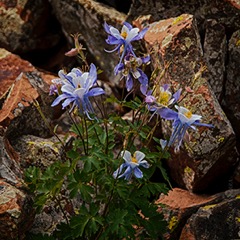
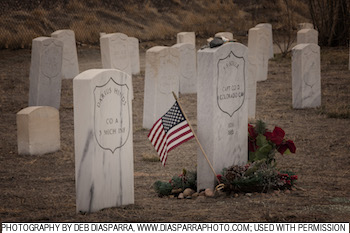
    Photography by Deb Diasparra, www.diasparraphoto.com. Used with permission

    “It’s all a part of God’s plan.” “Everything happens for a purpose.” These are sayings we rattle off to each other when things go wrong—when someone is ill, dies, loses his job or even when someone’s brain malfunctions and he kills randomly.

    Does God have a plan for my life? I believe He does. Does he have a purpose for my life? I am certain he does. But I’m not convinced that everything negative that happens to me— physical or mental pain, horrendous accidents, heart breaking loss or brutality—should be interpreted as something God planned. I’ve heard this said in hospitals, at funerals, etc., as a way to rationalize events. I think it can be perceived as devoid of compassion—even though it may not be meant that way. Does it help the lost? Grieving? Injured? I rather think it strips them of what they need most to recover: trust in God.

    How does one trust in a God who has turned on you or is less interested in you as a person than in using you to achieve some existential plan? At least that is the effect these statements have on me—and I suspect on some others. I imagine people of all faiths struggle with this.  Calling every event a part of God’s plan and purpose may also be a way to blame God for all the hardship or evil in the world. But does it acknowledge the presence of evil that has nothing to do with Him? We have free choice, and some people make evil choices.

    This has special meaning for me personally. I suffered from a painful, abusive childhood and have taken a lifetime to recover from those events. I don’t believe God planned them. It was God who lifted me out of that world and placed me in the loving place I now occupy. His love has carried me through my pain, and His love will eventually take me home.

    The truth is, even though I am a follower of Christ, Jesus doesn’t promise me a life without pain and loss. Rather, He promises me His presence with comfort, hope and grace. Jesus said he would be with us always—to the end of the world (Matt 28:20 ). I personalize that to mean the end of my world—my time on earth.

    Is the pain in my life part of His plan? I think not. Perhaps I’m wrong; I’m not a theologian. I don’t have all the answers. In my morning prayer, I give my day over to God and His will for my life and let go of my concerns and let God help me through them. I don’t hold Him responsible for everything that might go wrong.

    However, I can discover purpose in all things. For example, in loss, I can give purpose to pain by helping others with similar experiences. A brutal world can motivate me to be kinder and gentler within my family and community. Any anger in my loss can be directed to implement change–both in myself and in my world. The pain I suffer in this life can define me for the better or worse. Much of that is up to me.  I am convinced we can find purpose in all that happens—even the devastating things that are not from God.

  • Circling the Track

    Circling the Track

    I’m alone on a circular track where I either go around again and again or finally stop—depending on a guy on a pedestal holding either a green or checkered flag. I know what you’re thinking. Flags are used for car racing and starting pistols for track races—but it’s my dream! Each time I pass the flag man, I ask myself: Who gives this guy any right to determine another lap? He’s not running the race.  Is he even qualified to impel me to run the length of my race?

    I feel tired when I awaken. I’ve kicked off my covers, and my feet are freezing.  Still, my dream brings questions to mind. This morning I am on an endless track where how many laps and when to stop is not determined by me. While laying in bed contemplating repeated challenges in my life and staring at the ceiling I ask myself, “You here again? Why? Wasn’t that enough?” I’m sure you’ve heard that our emotional lives are spirals. We return to the same place horizontally as we evolve spiritually and emotionally upward to a higher plane. Frankly, that’s a nice image, but today I don’t buy it. I don’t feel on a higher plane. Yet, there’s the green flag, and with a deep sigh I know I have to keep running the race.

    My life has multi-faceted, overlapping tracks. When I write, for example, I sometimes feel like I’m running in place. I become a perfectionist and find fault with every effort: “This is terrible. Do something!” A yellow warning flag keeps waving until finally I pull out the checkered flag myself and shout, “Enough already! Get this endless, imperfect book to a publisher!” I am reminded of Leonardo de Vinci who said, “Art is never finished, only abandoned.”

    Then there’s the motherhood track. Every mother knows there are only green flags on this track until we are six feet under. Even if the kids are grown, we remain influential and continue to offer support and mentor (when asked). The hardest part is to keep silent until asked while I continue to circle this track.

    The homemaking track is short, and I pass the same place every day. Everyone knows that housework is never done. Yet, it is both cathartic and routine for me, and I sometimes need one or the other—or both. I just keep mindlessly circling this track without complaint. Pretty much expected that anyway.

    I’ve had almost 42 years of green and yellow flags running the marriage race. But honestly, only Randy and I hold the “Enough already! I’m outta here” flag. So far, we are still functioning as life partners and neither has waved a checkered flag. After all these years, we may both be too tired to do so. Or, more likely, we still enjoy each other’s company.

    I know God holds the ultimate checkered flag in life-and-death issues. Until He ends my foot race and calls me home, I’ll keep running—even though at times my body feels too tired, my heart wants to burst, my purpose is difficult to see and my feet are still cold. However, I’ll trust Him with that flag.

    With that thought, I climb out of bed with a prayer that God will help me focus on the moment and run my race today. My cold feet and I hit the floor—not exactly running but at least I’m upright.

  • Freedom to Fail

    Freedom to Fail

    If you ask most people to list their freedoms, they might tell you they are free to vote, to succeed, to make choices or to pursue happiness. I doubt they will say they are free to fail. And yet, without this freedom we can be paralyzed as artists, individuals and spirits. (One opposite fear, ironically, is the fear of success—but that’s another blog.)

    Fear of failing is often drummed into us as children when some of us learn that failure can result in lack of acceptance and debilitating criticism. These “not okay” communications can come from parents, teachers or peers. They can be reinforced in adulthood.  Overcoming negative messages is essential to doing and being what God intended us to be when He created us to fulfill our personal potential.

    Have you ever heard the following: “Anyone who isn’t making mistakes isn’t doing anything”? Embedded in this phrase is the freedom to make mistakes. The fear of failure is chief among emotions that lead to the lack of successful living and a waste of talent. Franklin D. Roosevelt, in his first inaugural address on March 4, 1933—at the peak of the depression—made the famous statement: “The only thing we have to fear is fear itself.”  He knew that fear could paralyze an entire nation.

    When I start a new writing project, I am sometimes afraid of failure, success, inability, etc. But if I stay paralyzed by fear, I will accomplish nothing. I tell myself, “You are apprehensive, but that alone can’t stop you. You are permitted to fail.  Now get busy!” At that point, I can plant myself in front of the computer, take a risk and start writing.

    Of course, the greater the risk taken, the greater the risk of failure. As it is, many people don’t take risks because fear dominates many of their decisions. Some writers stay within a comfortable genre, not only because they love it but because they can succeed with the familiar. To go outside the creative comfort zone and try something new requires ambitious goals and a willingness to take on diverse challenges. It can only be done with an understanding that we must accept the possibility of failure before we can succeed.

    When I was involved in our local National Writer’s Association (NWA) meetings, a monthly prize was awarded to the person who had the most rejections for publication.   He would receive an NWA mug in recognition of effort. The award was meant to teach us that when it comes to publishing, it is usually the one rejected the most who gets published the most. (I won so many times that I collected a considerable mug set. :-)) It taught me to stop fearing rejection and keep making the effort to get published.

    Failure is an opportunity to improve. Failed experiments often lead to discoveries not on the agenda. (Scottish biologist Alexander Fleming, while trying to investigate staph, and as a result of sloppiness, found a strange fungus on a culture—a fungus that had killed off all other bacteria in the culture. With this serendipitous discovery, modern medicine was forever changed.) Failed writing is simply an opportunity to be a better wordsmith. It is a measure of strength that failure merely propels the writer into some new attempt to succeed.

    Anyone who embraces the freedom to fail will strive on, learn new things, occasionally change direction and eventually reach his goals. The freedom to fail will be his friend.

  • Sailing on Sand

    Sailing on Sand


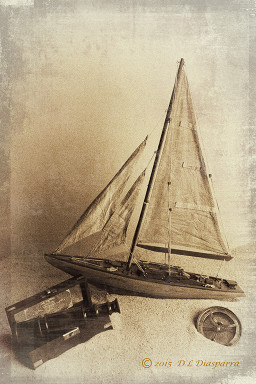
    I dreamed I was sailing a fully rigged tall ship. I felt the wind in my hair and watched the sails billowing. I was content, in control, captain of my own destiny. I picked up my spyglass and saw another vessel not too far away. That boat was sailing in sand—beached. The captain waved at me—oblivious to the that he was stuck and going nowhere. I wondered why he wasn’t conscious of his predicament and considered how I could inform him.

    Suddenly, I looked down. There was only sand beneath my ship as well, and the water was several hundred feet behind the stern. I was distracted by the other captain’s conundrum and didn’t realize my ship had left the water and was now also sailing on sand. I awoke, panicked.

    The lesson of my dream was quickly apparent: When focusing on other people and their perceived difficulties, I fail to sail my own course. Instead, I work out problems in my head that are not my own. Moreover, in my experience, people find a way through their own dilemmas. They only need a compassionate, listening friend.

    As I lay in bed contemplating my dream, I realized that both the other captain and I were confident–and had run aground. I couldn’t (and shouldn’t) do anything about his problem; however, my problem was another story.  My dream was telling me that my subconscious knew where I was stuck in life, and I was anxious to make a course correction. I grabbed a pen and began journaling. Within a short period of time, my writing revealed the problem. I said a little “Thank You” to that part of me that keeps me focused on my own issues and immediately turned my attention to the real source of my concern.

    There are several reasons we sometimes obsess on the uncontrollable. First, it is often easier caring for others than caring for ourselves. (That is especially true of me as a mother.) Second, obsessing on the uncontrollable can be a way to circumvent pain. Third, it can be a way to avoid change. Still another factor for me is my over-developed sense of empathy as a sensitive, which in many situations is a good thing, but can be taken too far.

    I learned much in this dream and writing exercise. Concern over another person is a good thing. Compassion requires it, and we need more compassion in this world.   However, if I find my thoughts turn from concern to excessive worry about people and things I have no control over, it is a red flag—an indication of the need to divert my attention to what I can control.

    To accomplish our goals in life, to stay on track, to be whole people, we need to spend time focused on our own issues and life path. I know that when I do this, I can avoid dreaming about problems with another’s ship while I overlook that my ship has run aground and I am sailing on sand.

  • The Writing Bond

    The Writing Bond

    While attending a yearly conference of the National Writer’s Association where I was to receive an award, I found myself sitting across the table from a lovely, articulate woman—an attorney hoping to publish her first book.

    We were enjoying the final dinner of the four-day conference and listening to the keynote speaker, a well-published author. He spoke on the importance of assistance from other writers through his journey to publication. When he finished, the attorney leaned across the table and told me that she had never come across a kinder, more mutually available group of people. “Everyone had been so anxious to help,” she said.  “It has been a wonderful experience.”

    “Aren’t attorneys at legal conferences also supportive?” I asked.

    She explained that, in her opinion, professionals who attend legal conferences act as if everything is a zero-sum gain. “If one wins, another loses. It can be quite competitive.”

    Her statement did not entirely surprise me as I have observed similar situations.  I have worked in many environments, owned a business and attended corporate conferences. Outside of my family and personal friends, I feel more welcomed and supported with fellow authors than any other group.  Even the most successful authors make themselves available to me with advice as I attempt to reach my goals.  I also make myself accessible to others.

    After listening to my tablemate’s opinion, I considered my writing groups and their importance. Several things came to mind. First, in critiques, workshops and writing organizations, it’s always about the writing—not the person. Second, when we critique each other’s work, no one comments on the appropriateness of the piece, gives his or her opinion about the content of the work or takes aim at another’s vulnerability. We know that most writers are private people, and publishing is often a terrifying exercise in self-exposure.

    When in critique, each of my writing colleagues makes every effort to help the others hone their work; we constantly learn from each other. When one of us finishes a manuscript, gets published or receives some accolade, we all celebrate. In the process, we learn much about each other and bond as friends.

    I am lucky to have many supportive personal friends who are not writers. I don’t know what I would do without them as they have shepherded me through tough spots. My life and I are richer because of them.

    I also consider myself fortunate because of fellow authors who befriend me and help me on my journey to publication. I recognize my writing friends as essential to the balance between being with others and the considerable alone time that creativity requires. Like in the case of the keynote speaker, I know my work and life are richer because of bonds formed with and help received from other writers.

  • Lessons Learned Playing Jacks

    Lessons Learned Playing Jacks

    I played marbles a lot in grade school. (Lost a lot of my marbles there! 😦) I learned teamwork playing first base and sometime shortstop on a girls’ baseball team in junior high. (Softball was for wimps, and we were good enough to consistently beat the boys’ team.)  But one of the most important lessons in life I learned playing Jacks.

    My friends and I gathered for a Jacks-a-thon every recess on the covered cement patio outside the parish hall of our Lutheran school. We’d sit, legs folded neatly to the side. In those days, we wore dresses properly tucked to protect our modesty. (Thank God for slacks that came with feminism!) At first, we’d play with the rubber ball that came with the set at the five and dime. As time progressed, we began using golf balls, which bounced better.

    It was a quiet game, and I loved quiet—even as a kid. We broke into twos—different pairs at different times. It helped us all connect as friends, and those friendships continue today. I don’t know who was best. (Chances are if I were best, I’d remember. 😀)

    Jacks is a game that has its own built-in order and practice. First pick up one, then two, then three and so on. One can’t get to the next pickup until one finishes the last. If you missed a pickup, you started again. It’s a good game to prepare for life. Sometimes, I think too far down the road: How am I going to pick up ten? When I throw the jacks out, will they spread too far? In reality, I can only play the game in order. And when I get to the number ten, I will be practiced and ready for it.

    What I learned playing Jacks works well in my writing. I ask myself when I’m going to find time to write. How am I going to write my next chapter—define my character? What will I do to market my book? But, as in the game of Jacks, writing is done one step at a time, and if I can concentrate on today, tomorrow will take care of itself.

    “Sufficient unto the day is the trouble thereof.” That’s somewhere in the Bible. Keeping on task, not worrying about the next step, accepting mistakes and continuing on, letting the game (and life) unfold in logical order can be applied to any task in any environment. It works in small tasks like cooking, cleaning and paying bills and in large efforts like marriage, raising children, the work environment and planning for retirement.

    I only have to train my mind to stay in the moment, to pick up what I need to learn today, to let step ten be what happens another day—and nothing I need to worry about now. When I get off track, I remember those games with my friends and remind myself that life and Jacks should be played in a similar way.

  • A Princess Among The Many Peas

    A Princess Among The Many Peas


    In The Princess and the Pea by Hans Christian Andersen,  a woman who claims to be a princess cannot rest because a pea that has been placed below the twenty mattresses she is sleeping on feels uncomfortable and keeps her awake.  According to the story, this level of physical sensitivity is a sure indication that she is a princess.

    When I was very young and first read The Princess and the Pea, I immediately identified with the princess–not because I was a light sleeper, felt entitled or was looking for a prince to rescue me, but because I was a clairvoyant and empathized with her sensitivity. I could perceive things others could not.

    Science could not (and still cannot) prove extrasensory perception ESP/clairvoyance, and the conservative church I grew up in historically disapproved of it. Church teachings indicated my “gift” was suspected as a tool of the devil. (I doubt that it occurred to my church leaders that their gifts could be used for evil ends, too.) What could a clairvoyant child do in such an environment? I simply tucked it away to investigate later and remained anchored in my own lonely reality.

    In time and with maturity, I came to recognize and understand my unique abilities: foreseeing events before they occur; seeing things that are happening elsewhere; observing auras; viewing things that happened in the past, and other clairvoyant experiences. I grew to understand the limits of religion and embrace the reality of my own Christianity and spiritual situation. I gave my ESP/Clairvoyant abilities into the control of God through prayer. I would trust Him with what He had entrusted to me.

    Most of what I experience cannot be shared, which sometimes leaves me isolated—until what I know becomes common knowledge. Revealing my clairvoyance has made me a target of various reactions ranging from acceptance to outright anger and the inevitable judgmental attitude. Because of that, what I experience sometimes leaves me feeling vulnerable.  However, it is important to be true to my authentic self.

    I now embrace my clairvoyance as a part of me that I nurture, love and respect. It sometimes remains hard to sleep when my sensitivities discover the “pea” of clairvoyance. No wonder I identified with the princess!  I wrote the sonnet below to put words to both the clairvoyant experiences and God’s eternal grace toward my clairvoyant self.


     Mist and Mysteries

    I sit atop a crest, a treeless bend,
    and let my eyes roam over valleys low.
    I’ve climbed the rugged trail alone again
    and come to talk to you in clouds, my soul.
    I hear the world’s voice and feel my head
    recoil itself from static noise once more,
    until it dies away, an echo shed.
    I feel the breezes from a distant shore.
    They lift me and carry me aloft
    toward clouds of mist and mysteries untold.
    I sense with ears that do not hear a word
    and touch with hands my eyes cannot behold.
    I feel Your presence permeate this space
    and brush the timeless nature of Your grace.

    Previously published:
    Parnassus Literary Journal, Vol. 28, No2, Summer 2004
    The Pen Woman, September 2006
    In the Heart of a Quiet Garden, 2013– Finishing Line Press