Category: The Writing Path

  • Three Fallen Trees

    Three Fallen Trees

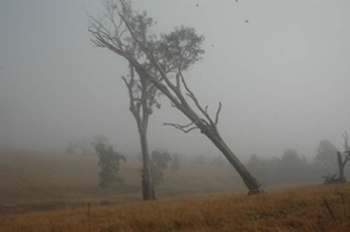
    When it comes to war, no one is a winner.  A few years ago on Memorial Day, I wanted some alone time and found myself walking through a neighborhood open space. Our area had been hit by a devastating storm, and I observed the damage that 80-120 mph winds can do. To quote an over-used cliché, it looked like a war zone.  I wrote this poem when I returned from my walk.  These fallen trees reminded me of those who fight in war zones and lose everything from their innocence to their lives. Their loved ones suffer loss along with them.  We owe all of them a debt of gratitude.


    Three Fallen Trees
    Memorial Day, 2010

    A khaki-colored leafless tree, mid-way in life,
    branches folded toward its trunk
    (neat and tidy, as if it volunteered to fall),
    lies peacefully upon an open meadow,
    uninformed of its final fate.
    Only the base, snapped clean and quick
    from the isolated, earth-bound stump,
    alludes to the strength of a violent end.

    A courageous tree with one arm shattered
    drags it on the shaded ground below.
    Sunlight finds me through its jagged break.
    A few miraculous green fingers,
    grasping the tips of nearly lifeless branches,
    reach out and brush my shoulder,
    whisper with a sudden gentle breeze:
    This is my desperate effort to survive.

    The slender white carcass of a stately tree,
    stripped by its fall of every branch,
    roots exposed to capricious elements,
    bark worn off by the fleeting years,
    like a wooden soldier,
    lies between the snake-like roots
    of pristine, leaf-filled, innocent youth,
    a sacrifice to future generations.

    Copyright 2013 by Laurel Jean Becker
    In the Heart of a Quiet Garden
    Finishing Line Press

  • A Perfectionist?  Who?  Me?

    A Perfectionist? Who? Me?

    This morning I began to analyze a behavior I’ve had for years while working my morning puzzles.  I like the letters on the crosswords to be the same size and shape.  If one is not, I erase it and “correct” it, as if it were wrong.  With Sudoku, I like the numbers I put in the squares to be the same size as the numbers already printed—and the same distance above the line.  How very Monkish of me!  (Monk is the fictional obsessive/compulsive defective detective on TV.)

    Crosswords have been a long-time love for this wordsmith, and I added Sudoku after a major surgery in May 2006 when my brain didn’t seem to want to come back online.  I started doing both crosswords and Sudoku every morning in order to develop the new synapses that researchers said would help keep me from a complete brain warp.  (I’ll let you know how that’s working in a few years.☺)

    I’ve never thought of myself as a perfectionist.  I like things the way I like them (don’t we all?), but they don’t need to consistently meet too high a standard.  Anyone who knows me knows my house is never too clean, my ironing never quite done, my dryer frequently full of clothes that have been there for a few days.  Toward the afternoon, one can often find a pile of dirty breakfast and lunch dishes in my sink.

    However, if this insistence that all my crossword and Sudoku puzzles be uniform isn’t perfectionism, I don’t know what is!  Today, I finally asked myself “Why????”  The answer was directly in front of me—perfectionism that is rooted in fear.

    I’ve been aware of an underlying fear each time I pick up a pencil or pen or sit in front of my computer and each time I enter my office to write.  I’ve been aware of the memories of the abuse in my early childhood when I was beaten for trying to learn to write with a pencil.  (I suspect my abusers were afraid I would tell, which I certainly did!)    This spilled over into my professional writing.  I have also been afraid that I wasn’t “good enough” to be a writer or perhaps couldn’t do it at all.  (I understand a lot of authors have to overcome this one daily.)

    A friend of mine once asked me how I perceived being an author.  I immediately said,  “It’s like having a playground on the other side of a high fence, and I often don’t know how to get over it.”  The fence is fear, which keeps me from writing—at least temporarily.   And the way I keep myself afraid is perfectionism.  Each day when I open my office doors, I am challenged to get beyond the fear, to sit myself down and write for my scheduled amount of time, no matter how I feel.

    A perfectionist?  Me?  Yep, I guess so—at least when it comes to picking up a pencil or pen, pecking on a computer or doing word games.  Can I overcome the downward pressure rooted in my childhood—or the pressure I place on myself because of expectations and fear I allow to color my present?  I haven’t got a clue, but you can be sure I’m going to try.  And this effort to reach out and share my dilemma is a good beginning.  When I get to the point that I don’t care how big the numbers and letters are in crosswords and Sudoku, and when I no longer think about whether I am good enough as a writer, I will know I am firmly on the path to overcoming my own brand of perfectionism. ☺

  • Controlling Jack

    Controlling Jack

    A professional writer is an amateur who didn’t quit.
    — Richard Bach

    I once spoke of writing as my “hobby,” but years ago I made a decision to consider myself a professional writer. I ordered letterhead, joined two writers’ organizations, and set aside three hours each day for uninterrupted writing. Three hours is a long time to glue my seat to a chair while knowing full well the world probably wouldn’t soon see any results.

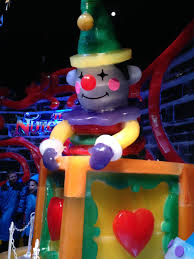
    My present project is a poem entitled, “Jack in the Box.” “Jack” has a mind of his own and pops on his time–not mine. I plan to submit the poem today.

    However, first I have clothes to wash and dishes to get in the dishwasher.
    I finish the dishes and put another load of clothes in the washer. The washing machine chugs while my phone rings in my office. I won’t allow the machine to take a message. The ringing phone is like a crying child I must pick up. It’s my automatic response retained from when my kids were young and called when they became sick at school or, as teenagers, needed help. The call is from my accountant, who reminds me that our yearlong tax plan will go up in smoke if I fail to meet the deadline.

    I begin preparing a grocery list instead of writing so I can avoid the nervous feeling when I pick up my pen. Is the nervousness really unacknowledged fear? Fear of failure? Rejection? Success? I am uncertain. Fear is a paralyzing force. You needn’t listen to it anymore, I repeat over and over to myself, hoping that it will sink to the bottom of my writing well.

    A few years after I decided to be a professional, I added an office to our home. Oak, crown molding frames the peach colored walls of my study. Floor-to-ceiling oak cabinets and bookshelves embrace my most beloved books. Despite the room’s inviting warmth, I don’t feel ready to work.

    In her essay entitled, “Professions for Women,” Virginia Woolf referred to her alter ego as her “Angel in the House.” Rather than sympathize with her own wishes to write, her Angel preferred to sympathize with the wishes of others. Like Virginia Woolf, I too have an “Angel” who is overly sympathetic, unselfish and sacrificial. But Woolf’s Angel represented the traditional roles of women of 1931–mine is just an excuse. She stands at my study doors, like the angel on the East Side of Eden, waiting for me to try and enter. And just as I cross the threshold, she whispers, “Tonight’s dinner isn’t fixed,” or “The garden needs weeding,” or “Those library books are overdue.”

    This time my Angel whispers, “You need some groceries.” And I do. I quickly grab my purse and head out the door. After the groceries have been put away, my poem, “Jack in the Box,” tumbles in the back of my head like clothes in the dryer. At least for today, Jack and I are the same person. It’s me I can’t control. I spent three quarters of my day proving that fact.

    I fix a cup of herbal tea. It motivates me to close the French doors to my study and turn on the computer, a baby step in the right direction.

    Once I begin, the time flies, and I wonder why I hesitated. Two hours later, I seal the envelope. I started this poem several months ago, working on it daily for the past three weeks. On the way to the mailbox my shoes shuffle on the sidewalk the way they did when I was a kid and my mom forced me to do unwanted chores. I picture our mailman shaking his head at my efforts to get published and wondering when I am going to get off my duff and get a real job–like his. I turn the envelope upside down, hoping he’ll toss it in the “out” basket without looking at the address.

    With my poem in the mail, I begin the first draft of a requested article. This time I don’t listen to my Angel or make excuses to cover my fear. The washing will get done eventually, the children are grown and the phone is not a crying child. My nest is empty. The kids are marvelously independent and accomplished.

    The alarm clock jars my attention away from the paper. I open my French doors. I am committed to three hours of work per day, but no more–that’s my rule. I congratulate myself. Three hours done! Smug satisfaction invades my mind as the hall mirror catches my image, and I can see a glow on my face. Yep, I assure myself. A little self-discipline is all it takes.

    (Previously published in Authorship by The National Writer’s Association
    Winter/Spring, 2003, No. 245)