Blog

  • What I Do When I Cannot Write.

    What I Do When I Cannot Write.

    It happens sometimes. I simply cannot write. Try as I may to do so, nothing flows from my mind to the page. I do what all writers are supposed to do. I keep my rear end in the chair until I feel it turning into mush—and my brain with it. Finally, I give up. Negative thoughts run through my mind. Perhaps I’m not supposed to write. Maybe my muse has deserted me out of sheer frustration. Perhaps whatever I choose to write will mean nothing to anyone, and God knows it. The solution? I find other things to do :

    • Clean. I rifle through my closets and cupboards and donate anything I can’t use to charity–or the round basket, file financial papers, shred outdated material, etc. When I get finished, at least I have accomplished something that encourages me and makes me feel like my day hasn’t been a complete waste of time.
    • Cook. I love cooking and baking. I cut and keep interesting recipes that challenge my culinary skills. When the results of my efforts are served, I get lots of compliments from my family, which compensates for not being able to write a word and provides an outlet for my edible creative energy.
    • Do routine things. Repetitive work releases the synapsis that allows me to “cook” my writing ideas while I’m working. This is totally subconscious and happens while washing dishes, picking up or doing laundry. I keep my hands busy and my mind free while hoping time spent with ordinary work will fill in the blanks.
    • Journal. Isn’t that writing? Well, yes, kind of. But it’s not my customary writing project. Often, journaling clears my mind of the emotions and thoughts that may be lurking just below my gray matter’s surface and is beyond my awareness (especially negative thoughts about writing 😊).  Carrying negative thought and emotions can block writing flow as effectively as the Hoover Dam blocks water flow.
    • Exercise: I swim, walk or use my stationery bicycle—anything that gets my heart pumping much-needed oxygen to the brain. Sometimes, the writer’s sedentary life itself can muddle the thought processes and obscure the writing path.
    • Garden. Okay, I kill more plants than I’d like to admit. However, the effort puts me on my knees, feels both fulfilling and humbling and reminds me of the One who is in charge of my life path—and my writing. There is something rejuvenating about the feel of soil through fingers and the smell of fresh-turned earth.
    • Take a day trip. Getting out of the house and taking in a museum, movie or play is enough to elicit creative writing. The big challenge is to find something I want to do. I’m a bit picky—or so my husband says.
    • Go to a writing workshop. Better for me to find one out of town in order to put distance between my office and me. A workshop not only helps to induce ideas and provide fellow writers to commiserate with, but the drive also provides stimulating views—as simple a group of cows and complex as different cloud formations.

    If none of these ideas work, I return to my office and keep my seat in my chair until my muse releases me from mental jail. Happily, I often find that by redirecting my attention elsewhere my muse gets jealous and begins to speak. Let’s face it, I’m willing to try anything to get her attention.

  • Of Branches and Twigs

    Of Branches and Twigs

    Oh no! I thought as I opened our curtain to a world of white. Unlike in other parts of the country, April snow is not unusual in Colorado. But my husband and I had just returned from Texas, and I was not anxious to slop through the wet snow to refill my fridge.

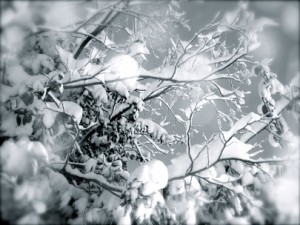
    As I watched the dark sky brighten, I felt this particular morning was somehow unusual. I wasn’t sure why. Perhaps it was the pristine scene of the still snow not yet disturbed by humans or cars. Then the leafless Mountain Ash outside my window caught my eye. Its branches extended from the strong trunk to smaller branches, no more than several inches thick, and trailed off to twigs only a quarter inch thick. Each was holding at least its width in heavy, wet spring snow.

    I called my husband to the window. “Why is something so fragile able to uphold such heavy snow?” I asked. “Because,” he said using his ability to see things from an analytical perspective, “there is no wind.” He was right! I knew instantly what had initially caught my attention was the stillness.

    I began to think about the slender twigs at the branches’ ends and the burden they held. Like the twigs on Mountain Ash, there are many fragile people among us: people who have little strength or are physically or emotionally thin. Yet, they still contain the life that will spring forth when their winter burden is over and the first Crocus of spring pops through the snow. Hopefully, like the Mountain Ash, the fragile in our world will leaf out and become stronger as seasons pass and their branches thicken and reach upward.

    The survival of we fragile human beings depends on many things, two of which are our connections to others who can help us survive and the absence of a wind of crisis that is too strong and can break our entire branch from the tree.

    The snow began to fall again, and I wondered how much more the thin twigs could hold. A question popped into my mind: Does God really give us only what we can handle? I’ve heard that cliché all my life with the same response: anger at the trite statement that people intend as comfort for others—or to reassure themselves. To me, and I suspect many, it is not comforting. In truth, I’ve seen how life has given some more than they can carry, and they end up like broken branches laying on the ground. I know for myself that He has often given me too much to carry without Him—and perhaps that is the point.

    The fragile people in our world, the human twigs that are able to survive two or more times their width of life’s burdens, are as much to be admired as the strong human trunks and thick, sturdy branches that can carry more snow. All the necessary parts of the human tree touched my heart that morning. At any given time, I may be either the trunk, a branch or the twig. I am happy to be any part of the tree and can appreciate the weak and the strong in both others and myself.

    I no longer dreaded the trip to get groceries. Instead I was grateful for the reminder of the human condition that this snow-laden tree had brought to mind. I smiled, turned from the window and began my day.

  • Sacred Stream

    Sacred Stream

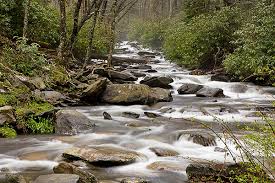
    Sunday morning is a good time to think about the sacred.  Is the stream that comes from my muse, or the source of my inspiration, sacred? Some writers would give a resounding “yes.” And to the extent that our creative natures are connected to and empowered by our Creator God, they would be correct.

    But I also believe my stream of creativity is God-inspired because I have committed it to Him. Something inside of me doesn’t want to give up the controls and also does not wish to be singularly in charge. Quite a conundrum!  Because of this internal conflict, I must keep recommitting my efforts to Him.

    Something just popped into my mind: an image of a stream coming directly out of my heart. I have a way of answering my own questions—if I will just listen.  Since I put my creative process in God’s hands, I know that what flows from my heart to the page is sacred. My responsibility as a writer, as far as this sacred stream is concerned, is that I listen carefully to what my heart wants to say. Then, with prayer and God’s help, I can be sure I am standing mid-stream when I write.

    This reminds me of a poem I wrote some years ago.  The river flows from God’s gift of creativity.


    Writing By the River

    (1)

    I write by the river that flows beside me.
    Beginning before I did, it moves beyond—
    into eternity.
    Sometimes, I dare to feel it, to stick a wary ankle
    deep enough to know the water travels faster than I.
    It gently splashes against my heel,
    changes course, flows sideways, moves around my foot,
    and meets itself just above my toes.
    Joining liquid hands, it travels on—
    beyond my sight, beyond my place in history.
    Because it touches me,
    and wends its way around me,
    I am a part of the memory the river takes downstream.
    It will join other memories of other people
    brave enough to enter.

    (2)

    The sunlight sparkles against the river’s blue water,
    lulls me into thinking it is its own source of light and color.
    But it is not.
    All of that is borrowed, like the sand it carries,
    like the churning pebbles it smooths,
    like the yellow aspen leaves huddled around its banks.
    Just like the river’s sand,
    my time is borrowed from God,
    time I accept with an open heart.
    But this debt need not be repaid.
    It is a gift—sometimes in disguise.
    When it reaches the sea,
    all that the river borrows, and remembers,
    will be left behind.
    But for now, the river and I flow on.

    Poem Copyright: 10/10/2008

  • Finding the Boost in Boredom

    Finding the Boost in Boredom

    “Boredom is the beginning of creativity,” I would tell my children when they lamented, “Mama, I’m BORED!” I would then look at them and say, “What are you going to do about it?” I would watch as they’d shift from one leg to another, roll their eyes from side to side, and finally smile—a signal that their unique natures had helped them find an interesting way to spend their time. Off they would scoot to some creative project, a good book, physical activity or simply play.

    Sometimes I think that boredom in our country is treated like a weakness. We keep our children active, involved, consumed by their activities. Much stress is put on Moms (and Dads) to carpool them to lessons in everything from piano and dancing to cooking for kids and t-ball. Parents become completely responsible for and involved in their entertainment.

    Busyness keeps kids out of trouble. But keeping them too busy robs them of the opportunity that enables the mind to know what to do now—what to do next. Of course, there is nothing wrong with organized activities. But too much of a good thing can stifle a child’s ability to entertain himself or herself. They need boredom occasionally to allow their brains to recharge and prep for the next creative challenge.

    One wonders if all of this rushing about and filling every moment with activity might not be the cause of the massive amount of stress and situational depression we suffer as a community. We don’t allow ourselves time to process our experiences on an emotional level—and learn the spiritual lessons of life. (This, of course, is different than clinical depression.) Though technology has brought wonderful things into our lives, it has also enabled us to keep constantly “in touch,” never spending quiet time alone or having a moment of boredom.

    I sometimes struggle with boredom myself. I shouldn’t. I have enough work to kill a plow horse, and I have family and friends who are always both a source of companionship and responsibility. But being bored is good for the soul. It precedes the “aha” moments in life. If that sounds impossible, think of it this way: without the empty mental space that boredom allows, nothing new and exciting can fill it. Boredom forces me to look outward, inward, resolve problems and make changes in my life–to discover that sweet spot of doing nothing.

    This approach works in my writing. The time spent “cooking” my work—in other words the time when I allow my ideas to tumble around in the back of my mind while I do nothing at all about them—is well spent.

    So, the next time your children (or your inner child) says, “Mommy, I’m BORED,” respond with “Boredom is the beginning of creativity. What are you going to do about that?” You will be pleasantly surprised at how much, if given time, your spirit can access and guide its creative nature—if it has the opportunity and permission to be occasionally bored.

  • You Are The Writer You Tell Yourself You Are

    You Are The Writer You Tell Yourself You Are

    It occurred to me this morning that as I begin the publishing process on my new children’s book, Weaver Pond Stories, I have been telling myself (and everyone in earshot) how much I hate marketing. I know that equal parts of fear and the need for personal privacy mixed together are at the bottom of this self-talk.  Mind you, I’ve done some successful marketing for both my husband’s and my music store and my poetry book, In the Heart of a Quiet Garden. But this morning I realized that what I’ve been telling myself about marketing could stop me from moving forward successfully.

    In reality, I actually enjoyed the marketing I’ve done in the past—though at first it made me nervous. The success I had in this area gave me confidence. So, why do I tell myself that I hate it? One reason might be that I hear it all the time from my fellow authors. (Perhaps I just want to be part of the group? 🙂  Or perhaps their attitudes are just rubbing off on me.)   But the fact is that I’m just as anxious and fearful when I begin a new writing project—and I love to write! It is perfectly normal to have questions when you do anything for the first time: Can I do it? Do I have the talent? The time? The stamina? Will I fall on my face? Most authors deal with the same questions. But I can’t let the questions stop me.

    So what do I do about this new self-realization? First and foremost, I need to present myself authentically: I don’t hate marketing. My experience is not sufficient to make that decision.  An authentic statement might be: I have enjoyed and been fairly successful at marketing in the past, but I am still a bit anxious as I begin this new and bigger project

    Second, garnering the support of others whenever I begin a new segment of a project increases confidence. I recently did that, consulting with those who have wide experience in marketing and listening to advice as they try to guide me away from pitfalls and toward tested, reliable processes. Early on, writers find out that being a successful author requires a community of helpers—from professional organizations, critique groups and readers, editors and publishers to marketing support. No one does it alone!

    Third, I need to think only of the next decision. Dwelling on a complete project and how it will begin and end is too much. What is necessary is to put one foot in front of the other—one step at a time. Besides, anyone who has been a project manager knows that a flexible decision process is important if one is to deal with unexpected situations that always arise.   It is impossible to anticipate every step, and the attempt to do so can paralyze the process.

    The result of this morning’s awakening should be to change my self-talk, to enlist the help of others and to remember to proceed by putting one foot in front of the other as I move into the marketing phase of Weaver Pond Stories. I must remember that if I repeat something negative over and over, I will come to believe it—and make it true.  However, the same is true of positive, authentic statements.

    As a result of this awakening, I know that I will become the writer I tell myself I am—only now it will be an authentic, positive message. Going forward, I plan to keep that in mind.


  • Broken Mugs

    Broken Mugs

    On my way to meet with my writing group, I grabbed my favorite travel mug—the one with a broken handle. The picture of a skull with a broken jaw immediately popped into mind. Oh yeah I thought and began laughing. I’m working on a murder mystery, and there’s no telling where the mind will travel when it’s cooking a mystery.

    Back to the broken mug. It’s the one with pictures of bookshelves on it. I love the warm color of the books wrapped around it and the way it feels in my hand—tall, narrow and lightweight—easy to hold. A thoughtful friend bought it for me, and I liked it so much I immediately went out and bought three more. Over the years, only two have survived—one minus a handle.

    Which brings me to the point.  Broken can sometimes be a useful state.  What makes my broken mug better? Without the handle, it fits in my car’s cup holder. As I drove across town, I continued to mull over the cup and the metaphorical usefulness of being broken.

    Practically everyone I’ve known has suffered tremendous loss: death of children, spouses, parents; divorce; loss of jobs, homes and security; and ill health. Let’s face it, life is full of potential for loss, and by the time we’re older most of us have accumulated a considerable amount.  God does not cause the pain in this world.  Life does.  However, as with my useful mug, God can engage our broken hearts constructively—to help others, to teach us, to help us understand our need for Him.  II Corinthians 12:9 reminds us: “My grace is sufficient for you, for my power is made perfect in weakness.”

    My first heartbreak came in childhood, but I’ve had a few since then, too. Sometimes I’m grateful for brokenness—but not all the time. If I am occasionally inclined to wail, “Why me?” I remember what I learned from a friend and remind myself, “Why NOT me?” I don’t know anyone who hasn’t suffered events that left them broken (and sometimes bitter)—at least for a while. Hearts can become bitter or hardened if we’re not careful. Someone once told me that hardening of the heart could age people more quickly than hardening of the arteries. I’m not sure if that’s true, but it’s an interesting idea.  We must work to keep our hearts open by dealing with our brokenness, and the emotional fallout, using a constructive, healthy approach. Still, wouldn’t most of us rather be 100% whole all of the time? I know I would!

    Though life can be difficult and painful at times, purpose and growth can be found in the pain, and much resilience and perseverance in carrying on. Plus, there is gratitude for the broken mug—and broken heart—that sometimes is a better fit. Just like my broken mug fits better in my car’s holder, I know my broken heart fits better into the human community and my Life Holder’s plan.

  • Keep Calm and Carry On

    Keep Calm and Carry On

    KEEP
    CALM
    AND
    CARRY
    ON

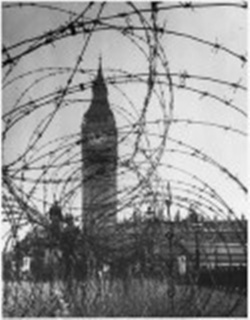
    These words were on one of several motivational posters published by the British government during World War II. The poster was simple: large-print, white letters on a red background with a crown topping the lettering. It was to be circulated upon the invasion of Nazi Germany into Great Britain. Because of luck, Hitler’s focus on Russia, or perhaps Divine protection, the invasion never occurred, and the poster was never officially issued.  It was unseen by the public until it showed up in a second-hand bookshop 50 years later.  (See:  barterbooks.co.us)

    When I first read about the history of this poster, I couldn’t help but chuckle at the stereotypical English understatement of the message in the midst of a horrendous crisis. The unfavorable odds of losing the war and potential invasion must have caused tremendous fear and uncertainty. I can imagine the British trying to stoically carry on, fetching their daily supplies, keeping a quiet, stiff upper lip while helping each other suffer the Nazi presence.

    Yet, there is great wisdom in these five little words. In today’s busy environment, we face constant manufactured and imagined crises that are poured into our heads by the competing media. It is difficult to carve out even a little time alone without beeping texts, phone calls or popups. Everyone feels pressured to be on LinkedIn, Facebook, etc. to avoid being left out. But it is important to occasionally unplug or switch off all the electronic devices. In a day when we can’t turn around without hearing the news of war, political intrigue, infighting leaders, I try to remember that we’ve been through so much before and that we will survive the present. When I feel agitated for no apparent reason, overwhelmed with life’s daily challenges, or lose sleep worrying about uncontrollable events, I recognize the need to take myself to that calm place where I can simply “carry on.”

    In order to do so, I must first let go of hearing or reading the most recent news, let go of the prying and critical media, let go of the phone, email and social obligations, let go of the needs of well-meaning friends, as well as any optional events in a demanding schedule. Second, I must embrace silence, presence with self and the Divine while I listen to my own inner voice. I spend my time quietly catching up on small things that have slipped through my cracks, enjoying my kitchen and creative cooking, allowing my muse to fill my head with the important “next” in my creative writing. For me, one of the greatest blessings in life is to focus on the daily tasks that are right in front of me. It is a reminder that my small world is all I can do anything about. It sometimes takes a day to adjust to the media vacuum, quiet, and lessening of stress. But as I do, I can finally discover that space in time where, like the British, I can “Keep Calm and Carry On.”

  • Early Morning Moon

    Early Morning Moon

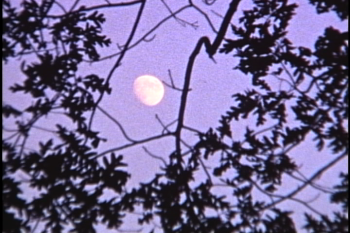
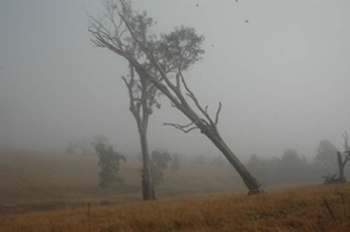
    Strange is my first thought as I draw open my west-facing curtains. I never expect to see the full moon at sunrise. But there it is shining through an early morning mist that clings and runs like tears along the leaves and through the blades of grass. A comforting verse suddenly runs through my mind: “…weeping may endure for a night, but joy cometh in the morning.” (Psalms 30:5)

    The sky is grey—like it is just after sunset when dusk begins to set in. But this sky is on its way to sunrise. The full moon’s job of lighting the night sky will be complete when the sun’s brightness dismisses it with, “Good job. My turn now.”

    It is always a surprise, after a long and difficult night, to open the curtains of my mind and find this symbol of hope and know the sun’s brilliance will relight my life.  Frozen at my window, I continue to gaze at this beautiful moon. I am reminded that it is just a reflection. It is not the original source of light. In the midst of this night’s darkness, the sun is still trying to help—if only in a reflective way.

    When life throws me off course and robs me of my peace, I can still know that God is present with me as He promised—that there is hope for the future morning. I see His reflection on the faces of friends and my family, feel it in their arms around my shoulders and hear it in the voices of comforters sharing my burdens.

    The gift of God’s continued presence, His reflective light, is still there, although there are times, as in this moment, that I can only see dimly through the mist.  I am grateful for the message of this early morning moon.  It reminds me to  stand firm in the knowledge that, with time, the mist will lift, His provision will become more visible and the night will give way to “joy in the morning.”

  • Three Fallen Trees

    Three Fallen Trees

    When it comes to war, no one is a winner.  A few years ago on Memorial Day, I wanted some alone time and found myself walking through a neighborhood open space. Our area had been hit by a devastating storm, and I observed the damage that 80-120 mph winds can do. To quote an over-used cliché, it looked like a war zone.  I wrote this poem when I returned from my walk.  These fallen trees reminded me of those who fight in war zones and lose everything from their innocence to their lives. Their loved ones suffer loss along with them.  We owe all of them a debt of gratitude.


    Three Fallen Trees
    Memorial Day, 2010

    A khaki-colored leafless tree, mid-way in life,
    branches folded toward its trunk
    (neat and tidy, as if it volunteered to fall),
    lies peacefully upon an open meadow,
    uninformed of its final fate.
    Only the base, snapped clean and quick
    from the isolated, earth-bound stump,
    alludes to the strength of a violent end.

    A courageous tree with one arm shattered
    drags it on the shaded ground below.
    Sunlight finds me through its jagged break.
    A few miraculous green fingers,
    grasping the tips of nearly lifeless branches,
    reach out and brush my shoulder,
    whisper with a sudden gentle breeze:
    This is my desperate effort to survive.

    The slender white carcass of a stately tree,
    stripped by its fall of every branch,
    roots exposed to capricious elements,
    bark worn off by the fleeting years,
    like a wooden soldier,
    lies between the snake-like roots
    of pristine, leaf-filled, innocent youth,
    a sacrifice to future generations.

    Copyright 2013 by Laurel Jean Becker
    In the Heart of a Quiet Garden
    Finishing Line Press

  • On Mothers, Daughters and Rodeo

    On Mothers, Daughters and Rodeo

    When I was a kid growing up in Tucson, Arizona, my Mom dragged me to the rodeo every few years. I could spot the dreaded rodeo grounds from a distance by the tan cloud of dust hanging in the air like a comic strip balloon:  I’m over here, ready to clog your lungs with dust, fungus, bacteria and airborne microscopic animal feces. The very sight of it made me wish I didn’t have to take another breath.

    The unpaved parking lot, covered by fine silt churned by thousands of tires over the years, had no marked spaces. This resulted in rows that meandered across the dusty field like the dry riverbeds around Tucson. My feet were magnets that attracted dust in a layer of dirt that crept up past my socks and into my pant legs. I always thought there was something in the dust that caused me to scratch my legs throughout the rest of the rodeo.

    By the time we found our seats, I was already thirsty.  We brought some water, but the dry air evaporated water from my skin faster than I took it in, and I was unable to quench my thirst for more than a few minutes.  The wooden bleachers were a dull, grey white and splintered where the wood had become weathered and dried by the hot sun. It was inevitable that my rear end would find an angry splinter looking for a victim.

    My mother would sit on the hard bleachers and scream at the bucking broncos and brahma bulls, gasp at the fabricated close calls of the rodeo clowns, grab imaginary horns and vicariously wrangle the animals to the ground.  I, on the other hand, would look at her as if she were out of her mind and dream of the moment I could leave for home and a shower.

    During the bucking bronco event, I would sit quietly, watching the poor animal try to escape the torture imposed on it in the name of  sport. Its back legs would kick and kick—eventually ridding itself of the rider.  I hoped that they would be kicked off immediately—and hard.  In calf roping, two cowboys roped the calf’s legs from both the front and back.  The poor little thing would bawl its head off as the rider threw his hands in the air to signal time and, hopefully, success.  I wondered why in the world the rodeo clowns dressed like idiots with dust-laden baggy pants, wide suspenders and painted faces to try to get the attention of an angry, snorting bull. Their jobs were to divert the attention of the bull away from the rider.

    When I look back, I realize rodeo had become a focus for the differences between me and a parent I never understood. My mother preferred friendships of men, did not like women, thought women should not be educated, liked to rough it like one of the guys, and admired men who, in my estimation, were not acceptable. I, on the other hand, was a girly girl who liked my girlfriends, wanted to be clean, read books, did well in school, wrote in my diary and preferred men who were gentle and articulate.

    When I was no longer forced to attend the rodeo, I never did again. Watching rodeo with my mother and a bleacher full of shouting groupies made me feel very much alone—and anxious to explore my own world where I could find like-minded people. To me, Mom was as much an enigma as was the rodeo, and if she had ever cared to ask my opinion, she might have thought the same of me. But she didn’t.