Category: The Path To Home

  • No Charge!

    No Charge!

    “You get what you pay for.” I’ve heard that line many times over the years. We think that if we don’t pay a substantial price for something, it isn’t worth much. Sometimes there is truth in the saying. But who doesn’t love to hear, “No charge!” How does that work with the also old axiom, “The best things in life are free?” Well, it doesn’t really. But that’s okay.

    I don’t need to go far to find what I don’t pay for. My often-romantic husband will call me away from cooking, reading or watching television in order to take my hand, lead me outside, put his arm around my shoulder, and point to a full moon that is crisscrossed by my barren winter tree branches—or is peeking between leaves from my summer trees. Then he says, “Isn’t it beautiful?” No charge!

    When shopping or running errands, I will pass a person who smiles and nods his head—as if acknowledging an acquaintance. But he is not. I never met him before. It evokes a return smile from me and fills me with a positive outlook on my fellow man and a cared about feeling that impacts the rest of my day. No charge!

    On my morning walk, a breeze caresses my arm and causes green leaves in the trees to rustle, garnering my attention. I observe a neighbor’s daffodils catch that breeze in their yellow bonnets and give way—as if nodding to me. No charge!!

    There is nothing—nothing—like the smell of brewing coffee wafting all the way up the stairs and into our bedroom—and the.first taste of hot coffee in the morning is to die for. It’s even better when my husband makes it and brings it to me in bed. (I don’t think I’m going to let go of him.) No charge!

    On some snow-covered mornings I gaze out my window and notice a black bird perched on the top of a massive pine. Why is it there, and where is it going? I observe its mate fly over and land just a few branches lower, disturbing the snow and causing it to cascade to the next branch – and the next – until a vertical stripe of the tree is green again. The birds fly together to their next destination, leaving me with my questions. No charge!

    It is true that in the world of commerce you often get what you pay for. Even sales must be scrutinized to determine if inferior material is displayed in order to fool the public into purchasing—or that a sale price is the regular price for ten months of the year. But it is also true that the best things in life are free. And it is okay to hold both these concepts in one’s mind. But don’t forget to notice the “No charge!” These things bring contentment, evoke smiles, and keep our hearts warm in what can be a cold world.


  • I’m confused

    I’m confused

    Were you wondering why Baby Boomers are the way they are? We received some very confusing messages from our parents. The good news is that I have never heard anyone in my generation who repeated these statements. Perhaps this will help you better understand the boomer generation:

                        I’m confused

    “I suppose you think you’re special, Lady Jane.”
    My name’s not Lady Jane.
    Of course I’m special!
    You always tell me that.
    So now I’m not special?
    I haven’t changed.
    And you’ve renamed me Lady Jane?
    It makes no sense.
    I’m confused.

    “I was not born yesterday, Mister (or Girlie).”
    What? No you weren’t.
    You’re really old –
                 much older than me.
    Which means you’re gonna die first, too.
    And what does that have to do with anything?
    I’m just saying I didn’t DO it.
    You make no sense.
    I’m confused.

    “This is gonna hurt me more than it hurts you.”
    No, it won’t!
    Do I get to spank your bottom?
    Are you going to yell or cry?
    Is your rear end going to sting?
    Will you be able to sit when this is over?
    I don’t THINK so.
    It makes no sense.
    I’m confused.

    “Don’t you make me pull this car over.”
    I can’t make you pull it over. You’re bigger, and
                besides, I’m not driving.
    I don’t know how.
    My feet can’t even reach the pedals.
    And I’m in the back seat, anyway.
    And why would I make you pull it over?
    You make no sense.
    I’m confused.

    “Close the door. Were you born in a barn?”
    Of course I wasn’t born in a barn.
    Why would you ask?
    Animals live in a barn.
    They couldn’t close the door if they wanted to.
    They’re too slow—and don’t have hands.
    I’m just in a hurry, and I forgot the door.
    That makes no sense.
    I’m confused.

    “You’ll understand when you have kids.”
    Do I have to wait that long?
    What the heck are you talking about?
    Anyway, I’m never gonna have kids.
    Maybe you just don’t want to explain it to me.
    I wonder. Do you even understand?
    Are you pretending you do?
    It makes no sense.
    I’m confused.

    “Money doesn’t grow on trees, you know.”
    I know that.
    Money never grows on trees, Apples and peaches do.
                 I love apples and peaches—but mostly peaches.
    And what does that have to do with a new bike?
    Bikes don’t grow on trees, either.
    Can we buy it or not?
    You didn’t answer
    It makes no sense.
    I’m confused.

    “We’re not laughing at you, we are laughing with you.”
    Yeah? Well, I’m not laughing,
          so who are you laughing with?
    Must be all these people
         who think they’re laughing with me, too.
    Besides, I don’t think it’s funny.
    I’m going in the family room.
         so I can be with kids who make sense.
    I’m confused.

    “I’m not mad, I’m just disappointed.”
    Really?
    Then why do you look so mad?
    Your face is crinkled and you’re staring at me
         like you do just before you spank my butt.
    And what is disappointed, anyway?
    I think you made that up.
    I don’t believe you.
    I’m confused.

    “Remember the starving Armenians.”
    Who are the Armenians?
    And why are they starving?
    There’s a grocery on every block
              with hot dogs and candy and cola.
    And how can I remember
            people I never met?
    It makes no sense.
    I’m confused.

    Besides, what do Armenians
    have to do with
    these terrible peas on my plate?

    Copyright: Laurel Jean Becker 9/19/18

  • Guidelines Toward Civility

    Guidelines Toward Civility

    For several days last week, television featured John McCain’s funeral. His passing saddened me because we lost a man willing to be present with, give emotional support to, and befriend many who did not agree with his politics.

    Over the years, I have witnessed coworkers, friends and families split over politics or social media posts. Remember, your relationship with friends and family must come first. Your senator, congressman or president will not be present at your dying moment—your friends and/or family will. McCain wasn’t the only senator or congressman willing to set aside politics for friendship, but there are too few—and not just in the political arena.

    We wound ourselves as individuals and as a nation by forgetting civil discourse in favor of bitterness, anger and division. Not a recent development, it is rather an insidious attitude that evolved gradually over the last 30 or more years and became a viral infection. It took a long time to get where we are, and it will take time and effort to reverse course. Everyone gives lip service to civility, but attitudes, discourse and defensive posturing continue to worsen.

    Given the environment, we’re all vulnerable to this type of behavior and thinking—I know I am. What might we do to heal the wounds between politicians, friends or family inflicted by constant conflict and partisan bickering? Although only one person who affects a small corner of the world, I wanted to do my part to keep from pouring salt into the nation’s wounds. I created guidelines for myself. Be assured that I am a work in progress on this. However, these standards helped me evaluate and improve my own attitudes:

    1. Never question motive. Most people function from mixed motives, and only God knows the heart. I have no business deciding or analyzing why people say or do anything. I’ve known people who acknowledged doing the right thing for the wrong motive, and vise versa.

    2. Practice kind assumptions. When people think or act opposite from the way I feel they should, I remind myself they are doing their best and thinking their best. We all come from different socioeconomic backgrounds, religious upbringings and work environments that influence our way of approaching life.

    3. Listen. This cannot include considering a rebuttal while another speaks. It does include concentrating on the speaker’s words and body language. By doing this, I will learn why others think as they do and get acquainted with them on a deeper level. Instead of judgment and critical attitudes, I can offer understanding and support.

    4. Censure what I watch on TV, read or listen to on radio. People make lots of money stirring the pot of conflict and anger. They are not interested in kindness or civility. They are not worthy of my time. I will find avenues for information that treat everyone with respect and can handle differences with grace.

    5. Last but not least, remember what we Baby Boomers were taught as children: “If you can’t say something nice, don’t say it!” That does not mean I muzzle myself on ideas or wrongdoings. Rather, I watch that I not gossip, call names or make negative statements about others. Engage the brain and weigh words before engaging the tongue. No matter the subject, this is good generational advice.

    The message of John McCain’s life and funeral is needed today. It was a timely reminder for me to continue to practice my five standards listed above. We need not all agree with John McCain’s policy positions in order to appreciate his attempts at civility and friendship. We need more like him.

    Copyright Laurel Jean Becker 9/1/18

  • One Small Branch

    One Small Branch

    Last week, with a bit of sadness, I glanced up at my ash tree to find one small branch with leaves that turned yellow—a portend of the fall and winter to come. The rest of the tree retained its green, viable appearance. While staring at that one branch, questions came to mind: With maybe 20-25 leaves, what about that branch caused it to turn yellow first? Perhaps that branch is weaker. Perhaps it gets less nourishment. Leaves change in the fall because chlorophyll breaks down. But why only one tiny branch? An arborist might be able to inform me.

    As I gazed at upward, it occurred to me that single branch is a symbol of my own aging process. I’m in the fall of my life and I have a lot of years left. But that little branch is also a reminder of my aging body beginning to break down—one part at a time. (This week, my knee hurting. Opps! There goes another part. 🙂 ) I am doing everything to keep the rest of my leaves as healthy as possible, not only to remain active, but to stave off that time when winter comes.

    In order to enjoy addressing my bucket list without a bucketload of work, I need to make my home and yard maintenance free by ridding myself of paraphernalia, retained for years, that may be useful to others. Those items that need to be kept in the family are being disseminated to children and eventually to grandchildren. Our wills and distribution of assets after we are gone have been addressed. Fact is, the more prepared to leave this world for the next, the happier I am while here.

    Some might consider ruminating about the coming winter to be a bit depressing. However, I’ve faced my own demise many times—the proverbial one foot on a banana peal and the other in the grave. So I will exercise, do my best with healthy foods, keep my mind as sharp as possible. If the Lord calls me home, I am spiritually prepared and will have done my best not to leave a material mess for my children to sort through. Having done this, I plan to use some part of each day to address those things on my “I’ve always wanted to do that” list (a smaller version of the bucket list) and spend as much quality time with friends and family as my schedule and theirs will allow.

    In others words, until the last leaf on my tree falls, I’m embracing joy.

    Copyright: Laurel Jean Becker 8/21/18

  • Cycling Uphill

    Cycling Uphill

    This spring, while taking my bicycle out for a first spin, my abundance of confidence led me to tackle a long hill. I’m older now, and the incline proved to be quite a challenge. Winded and tired, my body struggled. The farther I pedaled, the father away the top of the hill appeared. Discouraged, I took my eyes off the distance and focused on the ground just ahead of me, making a game of targeting small rocks, running over oil spots on the road, finding leaves and squashing as many as possible. Forced to face my out-of shape body, I at least took comfort in my good eye-hand-ground coordination.

    While focusing on the game, my speed increased and my legs gained strength. I thought this might be what is called a second wind; however, when I lifted my eyes to the distance, my legs again tired. I know, I know, this seems weird, but I swear it is what happened. I repeated this experiment several times that morning with the same result.

    After I returned home, this occurrence continued to engage my mind, which I believe was applying this bicycling experience as a metaphor for the rest of my life. I needed to keep my focus on the immediate road ahead and not on the distant, insurmountable hill.

    After having had three surgeries in a span of 15 months—with considerable recovery times—unaddressed projects had piled up. In an effort to organize, I decided to make a list: publishing work that is sitting in the bottom of my files, cleaning out the over-stuffed shed and gifting or throwing out the things I once thought important to keep, creating another book, addressing my finances and updating my filing, continuing my marketing of Tales from Weaver Pond, sorting books and donating to the Jefferson County Library, cleaning out the crawl space, planting and grooming my garden, etc., etc. The list elongated while I spent time recuperating. I knew I needed a system that would keep me from feeling overwhelmed, and, as a result, not getting any of them completed.

    Serendipitously, I had just read an article about an experiment conducted in 1918: the Ivy Lee Method, devised by Lee for Charles M. Schwab to encourage productivity in his company. Lee instructed each employee to make a list of six work priorities each day. No more than six were allowed. At the end of the day, they were to make the list for the next day—putting at the top any items they were not yet accomplished. If the employee completed four, he put the other two priorities on the next day’s list and added four more. As a result, company productivity increased exponentially.

    I determined to put what I learned on my bicycle about focusing on the immediate to a test in my daily life by using this formula. I listed only six reasonable priorities each day. Instead of putting an entire project on the list, I chose to work on each in limited time periods, i.e., ½ hour/day on the shed, garden or finances, etc. I also included some small items on the list. This was not a catalog of “to dos.” Rather, it was a limiting list. Throughout the day, whenever my mind led me down the dark path cluttered with huge projects and unreasonable deadlines, I reminded myself to focus only on those things on my daily list, forgetting about goals and focusing on the 6-point system. The self-talk helped and had to be repeated a few times each day.

    It worked! My energy no longer decreased by mid-morning. At the end of the day, I didn’t kick myself for not meeting a goal. Rather, I felt good about anything I took off my list and added the unaddressed priorities to the next day. Some days it worked better than others because of unexpected chaos. However, it helped me to let go of stress over what I did not have the time to do. I finished my gardening goals and to date have sorted through half of the shed. Randy is helping with this project, and we often stop, laugh and state, “Why did we ever think it necessary to keep THIS?” I’ve decided to work on the crawl space and books when winter weather prevents me from tackling the outdoor projects.

    I am ecstatic about how much I’ve accomplished so far this summer. That overwhelmed and discouraged feeling has left me, and I can see light at the end of my project tunnel. With the Ivy Lee Method and limiting time spent on a large project to ½ hour each day, I keep my eyes on the road ahead of me and off the metaphorical distant hill.

  • Prepare to be Unprepared

    Prepare to be Unprepared

    I am a planner. I like my world organized, taking time to anticipate and head off problems. I don’t think I overdo the planning thing–though some might disagree 😀. However, I found there is wisdom in preparing to be unprepared. I suspect some of you are impressive preparers—scheduling the course of a vacation to the last detail, positioning place cards for the perfect seating arrangement at a wedding or dinner party, mapping out a 5-year career plan, or deciding how to respond to a future success (or failure) ahead of time.

    To your surprise, on your well-planned vacation, your plane reroutes around bad weather, and you miss your first connection, throwing off your oh-so-perfect schedule. Or at your dinner party, one of your guests dislikes your seating arrangement and changes the place cards, putting you in the awkward social position of either changing the cards back or accepting, with a bit of resentment, this breach of etiquette. What happens when you find yourself walking out of your boss’s office in shock because your 5-year career path didn’t include the company making bad financial decisions, closing its doors and laying you off? Sometimes instead of the planned success of an endeavor, you get the opposite, i.e. a movie star, certain of an Oscar win, must tuck his acceptance speech back into his pocket and pretend to be happy for the other guy. This happened to me in reverse when I planned NOT to win the Author U award for best manuscript for my book, Tales from Weaver Pond. When my name was called, I stayed in my chair for a few minutes. Then I heard my name again, and while walking up to receive my award, I was sad because I’d already planned ahead for losing and couldn’t quickly get my emotions around winning. Really?

    With age, and hopefully some wisdom, I came to appreciate the idea of being prepared to be unprepared. Though not an extreme planner, I still find comfort and security in knowing where I’m going to be, what I’ll be doing, and how I’ll be doing it. This tends to reduce my apprehension. In the past, when my plans went awry, it elevated by 2x any anxiety I may have had by not planning. Since the odds of everything always going well are small, this was a breach of logic.

    But age has its advantages, and one is that, given enough time, we can figure out what works and what doesn’t work in our lives. I now prepare to be unprepared by keeping realistic expectations. Still somewhat of a planner, I take a philosophical approach by reminding myself that demolished plans often lead to unexpected pleasantries. Recently, on our way from Glenwood Springs back to Denver, my family turned around at Vail Pass, which was closed for bad weather. Instead of getting upset because we tripped back to Glenwood Springs and I missed a meeting, I noted it wasn’t a big deal and I’d experience more time with my granddaughters. That is always a blessing.

    Now in each attempt to prepare to be unprepared, I point out, Realistically, these plans may not work out just as I might like. If not, it’s meant to be and something good will come out of the changes. There are always silver linings when life alters my plans, though admittedly some are easier to find than others.

  • Falling Down the Rabbit Hole

    Falling Down the Rabbit Hole

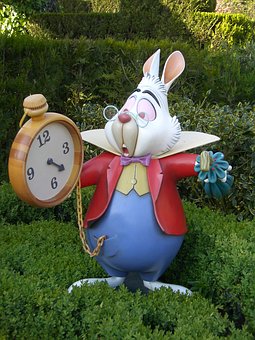
    I’ve both blamed myself and I’ve been blamed by others for following my own white rabbit down many a rabbit hole, leaving me in a place of emotional and logical nonsense. Well, guilty as charged! But I know I’m not alone.

    The term rabbit hole originated with Lewis Carroll’s 1865 classic, Alice’s Adventures in Wonderland, in which Alice follows the White Rabbit into his burrow, which transports her to the nonsensical world of Wonderland. Over much of the 20th century, falling down the rabbit hole has been used to characterize irrational, magical and challenging experiences.

    The use of the term has evolved to take on other meanings. During the crazy 60’s, tripping down the rabbit hole referred to taking hallucinogenic drugs and exploring existential thinking. It is often used as a way of explaining the process of getting from Point A to Point B with no clear route (and often no recollection) as to how one got there. I often find myself in a mini version of this when I don’t know why or how I entered a room. I just stand motionless, like an empty-headed statue, trying to remember. This behavior can be a subset of the hallucinogenic tripping above—but not always.

    On the Internet, a rabbit hole refers to an engrossing and time-consuming topic. While doing legitimate research, I’ve acquired habits that are spectacularly addictive: scary stories, obscure conspiracy theories, or famous last meals. (I actually fell down the famous last meals one—typical of my tendency toward the dark side. 😀) When Facebook and Twitter first arrived on the scene, I spent too much time with them. However, they soon lost my attention and, while I still maintain them, I climbed out of that one.

    These days, the term rabbit hole is also showing increasing use as a modifier, e.g., a rabbit hole question or phenomenon. An example question might be something like, “We’re not having this for dinner, are we?”

    I have many rabbit holes. I love occasionally binge-watching a favorite TV show. Netflix and Amazon Prime make it easier to get addicted. Once, Randy and I made permanent sags in our couch while we binge-watched 24 with Kiefer Sutherland for 3 days running. “What are we doing here?” we asked. “Are we nuts?” Occasionally we questioned, “Don’t we have a life?” while we laughed at ourselves the whole time. However, we kept falling down that hole until Monday, when we had to go to work. Thank goodness this is only an occasional rabbit hole.

    When I want to avoid writing, I search for work to do around the house. The smell of PineSol and shine from lemon-oiled wood make me feel good about myself—and look good to others—while I am neglecting my responsibilities and my internal critic. In the winter months, the heat from my iron warms the hand that doesn’t want to write. Other ways to escape writing time (or anything else I might try to avoid) is by perusing emails, reading, playing games online, etc.

    Randy and I sometimes watch a good historical movie or program while I keep my over-heated computer on my lap in order to fact check the writers and point out when some small event or statement is historically incorrect. I LOVE this rabbit hole! I get to be a critical nerd and learn obscure trivia at the same time.

    Okay, most rabbit holes are not worth the time spent in them. But I’m particularly fond of mine, and it’s hard to let go. Some result in benefits, like cleaning house and ironing. As misery loves company, I hope I am not alone while sitting at the bottom of any one of my dark rabbit holes. Perhaps you can recommend some new ones.

  • Packing Light

    Packing Light

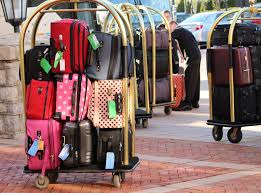
    Okay, I admit it. I’m notorious for packing the proverbial kitchen sink. When I hear the term “packing light,” I can’t help but smile. I’ve worked hard to become efficient at packing, and it’s taken a long time. Fear of the unknown necessitated that I pack for every eventuality–a behavior rooted in insecurity. Heaven forbid I find myself in an unfamiliar place without some small item like my personal shampoo or a bottle of Tylenol. No matter where we are heading, my husband now reminds me, “If we forgot anything, we can always purchase it.” It’s finally sinking in!

    Packing light when it comes to emotional baggage requires letting go of resentments, hurts or sadness. This kind of light packing I am accustomed to after years of life and loss. Dragging around unnecessary emotions allows them to weigh us down and hold us back. I deal with them and let go. This is much easier said than done, as I can attest to; but it is an imperative ingredient for a well-balanced life. To jettison is to discover freedom. Emotional baggage is like a person with a rope trying to haul a train down a track. I cannot afford this. I also cannot afford to allow the news of the day to worm its way into my head and cause turmoil. With all the misinformation put out by political fear mongers on both sides of the aisle, this can easily happen. My plate overflows with things I can do something about without allowing myself to be burdened with things over which I have no control. They take all the fun out of life. Let’s face it, existence in this world is difficult, and I believe in enjoying life as much as possible while I’m still able.

    Despite overpacking when I travel, I willingly rid myself of any nonessentials in my home. What I retain must meet one of three requirements: It is something I use or will soon use, is a family heirloom, or brings a smile to my face and warmth to my soul. If it doesn’t meet one of these three, I am anxious to find it a new home or throw it out. This keeps my home uncluttered and as functional as the space will allow.

    As I am learning not to overpack for travel, I want to continue uncluttering my daily life so it reflects a simplicity that is easy to live with. The following poem was written a few years ago. On occasion, I drag it out and re-read it in order to remind myself to continue to pack light–when traveling, carrying emotional baggage or in my home.

    Copyright 2/2/18
    Laurel Jean Becker


    Pruning in Late Summer

    I pad my knees against the ground’s small stones
    and deftly lean toward my garden flowers.
    It’s time again to prune the old spent buds,
    while holding hope for more late summer blooms.

    I gently cut each failing summer shoot,
    reflecting on my own pale, withered sprigs.
    They clutter life and slow my cautious steps
    toward newer goals and long-held childhood dreams.

    I seize this chance to simplify my world
    and jettison unnecessary work.
    Say no to life I do not yearn to live;
    make room to sow experimental seeds.

    I rid myself of those who jar my life,
    and make me feel I’m planted in loose sand.
    Requiring all my dwindling energy,
    they sprout fresh needs I cannot satisfy.

    Take time to grieve about a few lost blooms—
    the unmet aspirations of my youth—
    replaced by random, unexpected boughs
    that redirect my paths and energy.

    Release the goals that flooded yesterday.
    Tomorrow brings its own vibrant rewards.
    Time lends itself to future borrowers
    who focus on potential garden growth.

    I’m cautious not to sever healthy leaves
    so that the shrub endures no pointless loss
    of needed strength before first winter’s blast
    when sudden chills forecast a dormant life.

    Yet some small, lucky flowers get to stay,
    the ones bloomed late whose colors did not fade.

    Previously Published
    In the Heart of a Quiet Garden, Finishing Line Press
    Copyright 2013 Laurel Jean Becker

  • Never Hang Up Your Dancing Shoes

    Never Hang Up Your Dancing Shoes

    Last night I dreamed I was dancing again. At one point, Randy and I were dancing together. In reality, Randy doesn’t dance, but it’s my dream, and I can dream what I want. Woke up feeling refreshed and happy.

    Most people don’t know that I danced as a young woman—ballet, ballroom, line dancing, Texas two-step—anything that my dates could or would put up with. Shortly after we were married Randy agreed to go with me  to the Grizzly Rose to find out if he might enjoy two stepping, but he was a man of his generation, and dancing for him was only free style to rock music. As a result of physical losses that come with age, I can’t dance like I once did. One might think I’d wake up sad; however, this morning the opposite was true. I’ve never stopped dancing. Only now, it is in a different form: home making, baking, grandparenting and writing are just a few.

    Instead of the physical, I now dance the emotional and spiritual steps, keeping time with my muse and writing whenever I can. Like Ginger Rogers with Fred Astaire, my muse partners with fictional characters and dances around story until she glides through my mind, out my fingers and onto the page. When people ask where my ideas come from, I shrug my shoulders and turn my palms upward in an “I don’t know” pose. That’s a lie. When my muse begins to dance, it is a reflection of God’s creativity, and I have spent a lifetime dancing with Him.

    Keeping spiritually limber helps me to dance around corners in a rapidly changing world. Raising children and grandparenting requires flexibility. Because my own childhood was devastating and neither parenting nor grandparenting tapes were available–or appropriate–please excuse the mixed metaphor when I tell you I flew by the seat of my pants.

    Slow dancing through housework is cathartic.  Taking my time allows my brain to float free–revisiting whatever subjects and events dance through my mind.  Although I get occasional help with the house, people think it crazy when I tell them I prefer to do it myself.  Over the last few years my baking and cooking skills improved.  Now I volunteer for bakes sales, experiment with recipes and bake with the grandchildren.

    When God tells me to dance to a new tune, I am ready though not always willing. After considerable rebellion, I am now doing the marketing dance with my book. It is a challenge as the marketing world is changing exponentially. Each day, overloaded with work, I remind myself that I will eventually glide into it with confidence–as I once did with ballet.

    I’ll need to learn more new dances in the future. Hopefully my aging dance will be graceful. Years ago, my friend, Jan, gave me a tiny picture of a pair of ballet slippers. Below the picture it read, “Never hang up your dancing shoes.” I hadn’t danced in years, and Jan knew that. But the message encompassed more than the physical, and I knew that, too.  Each in our own way, we all need to keep dancing.

    As hard as it is to learn new steps, be willing to fail, and make a fool of myself in front of others (which happens more than I like), I will keep dancing.

  • Box Canyon

    Box Canyon

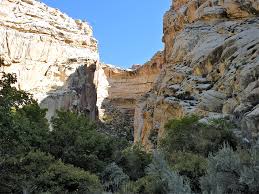
    Remember when western movies and TV shows about cowboys were popular? Box canyons were an expedient part of the plot. They have steep walls on three sides, allowing access and escape only through the mouth of the canyon or by climbing its walls. Actually, box canyons were used in the American west as convenient corrals with only the entrance fenced.

    In the movies or on TV, the good guys chased the bad guys into a box canyon and apprehended them, or the bad guys lured the good guys into the canyon, where riflemen posted on the walls of the cliffs tried to “pick them off.” Escape? Impossible! But only for the bad guys. If the unsuspecting heroes entered the box canyon, they always found a way out—either by reversing their path or climbing the steep walls.

    I’ve been stuck in my own box canyons. I’ve confidently followed a path until I found myself unable to go forward and unwilling to go backward. Often, the canyon walls were steep and I too tired and my load too heavy to climb. Eventually, I searched my mental saddlebag and came up with a solution.

    When in my late teens, I wanted a place of my own. However, my mother insisted I live at home until married—very old-fashioned. I refused to “tie the knot” to leave home. At first, I felt paralyzed and boxed in. No decision would be pleasant. It took a while, but I finally discarded the restraints of my mother’s message and found a place of my own. Of course, I felt her considerable disapproval in the process, but I knew it was best for me, and I did it anyway. I escaped that box canyon.

    Another box canyon arose later when I considered marriage. My childhood church taught that men were both the physical and spiritual heads of the home. I didn’t want anyone to be my head—spiritual or otherwise. I decided I wouldn’t marry at all if it meant giving up my individuality. Luckily, I eventually found a Christian man who believed in partnership—not headship. That fit my philosophy to a tee, and out of the canyon I rode.

    Leaving a box canyon often takes more than one try. In my early 20’s , I worked in the health care industry. When I heard of a challenging job opening within the company that would give me a promotion with more pay, I applied. The executive director told me in no uncertain terms that I had neither the personality nor the background to handle the job. She hired someone else. That employee quit within weeks after discovering the work too difficult. I applied again and received the same answer. She hired yet another person. That person went home ill and didn’t come back. I applied again, this time suggesting that the way she was handling it wasn’t working and maybe she should reconsider hiring me. She finally gave in and chose me with the stipulation that it was a three-month trial. I dived in (or climbed out) and kept that position for a few years.

    With my new book coming out and another in the making, I’m now in a creative box canyon. To climb out, I must lighten my load. I must drop all unnecessary things from my saddlebag (overscheduling, not delegating, saying “yes” to what I don’t have time for). Only then can I escape. I am seeking help with my website and marketing management. I plan to meet with publishing professionals in the near future in order to free my time from other business aspects of writing. I’ve also hired help with the house, and I am taking care not to overload my calendar. I’m part way up the canyon walls now. Hopefully, the bad guys (discouragement, defeat and delay) won’t “pick me off” before I can climb out of this box canyon and be able to hear my muse.

    Box canyons afford an opportunity for growth and change. Life presents many of them to all of us, and with each we have opportunity to find our paths and values–and to listen to our inner voices. Experiencing boxed canyons and finding a way out is difficult. Some I have handled well–others not as well. However, I have found them all to be beneficial.