Category: The Path To Home

  • Memories of Boat Bobbing

    Memories of Boat Bobbing

    Yesterday morning, as my husband emptied the dishwasher, he suddenly said, “Remember boat bobbing?”  A smile immediately came to my face as I swayed with the remembered motion of our boat bobbing up and down with the movement of the water.  What brought this to mind was that we woke to a soft, gentle rain encouraging us both to consider curling up with a real page-turner.

    “Remember the sun on our faces, a good book and a bottle of wine?”

    How could I forget?  Many of our friends liked to travel on their anniversaries—or at least do something exciting.  But to us, there was no better way to spend it than our annual ritual of boat bobbing. When our anniversary rolled around, a family friend offered her cabin on Grand Lake.  We went every year. When our children were born, we left the little ones–too young to take–with the Randy’s parents.  Then we’d head to our get-away.

    In the morning, I would pull Randy around the lake and he’d ski until he was exhausted.  He never fell.  Said falling in the cold mountain water was not permissible—even in the summer.  Instead, I’d pull him near the dock and he’d glide in.

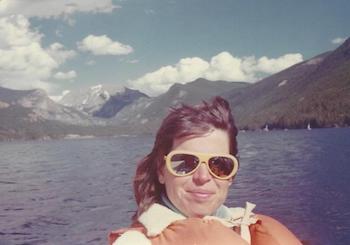
    We’d spend afternoons boat bobbing out in the center of the lake.  We’d lie on the bottom of the boat and read–sometimes separately and sometimes to each other. Occasionally, I would drift into sleep with the book collapsed on my chest.  Yesterday morning I recalled the simultaneous feeling of both the cool mountain air and warm sun on my face.

    Once in a while, another boater would come by to inquire about our seemingly empty boat.  We’d take time to reassure him and thank him for his concern before returning to our books and bobbing. Intermittently, one of us would lift a head out of the book and prop up on one elbow to notice whether we were getting too close to the shore.

    “I remember once there was a fishing line,” Randy said.

    “I remember,” I said chuckling at this memory.  One year we decided to hang a line over the boat and see if we could catch our dinner.  Eventually, the line bobbed up and down as a poor little fish tried to rescue itself from our meal.  We reeled her in to realize how small she was and how neither of us wanted to kill or clean her–or any other fish.  We laughed at what poor fishermen we were, unhooked her and sent her back to her family.

    Deciding we would make things look like we were fishing in order to avoid inquisitive boaters, we put the line back in the water with a weight and no hook. We never took the fishing pole again, though—just the good books and the bottle of wine.
  • The Cemeterian

    The Cemeterian

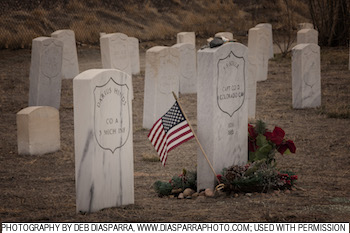
    Recently, my favorite TV show, Sunday Morning, featured a segment on a cleaning professional who spends his days off from work cleaning the tombstones of our veterans. He then researches their lives and posts their stories on his website. He loves bringing these veterans back to life.  What a remarkable man!

    I began to get tears in my eyes. This man spends his day off cleaning the tombstones of those he will never meet. He wants desperately to honor them. He is the most patriotic, remarkable man I’ve heard of in some time. My tears were tears of gratitude for people like him in our world.

    The program inspired me to consider where I might better serve others. But what skills do I have that are of a lasting value? Immediately, writing comes to mind. I see it less as a contribution than a compulsion, a way to share my ideas and thinking, a way to heal the pain in my own life. Yes, I hope that what I write might also help others, but the dedication of this cemetary man dwarfs my own contributions.

    When I look back on my own life, I see that small kindnesses made a big difference in my world.  When I was a child in the early in the 1950’s, I spent a night with an African-American couple who fed me soup, bathed me, washed my hair and allowed me to sleep in their only bed. They lived down by the river, and I wandered onto their small property unable to speak, having been through one of many traumatic incidents. I never forgot the nourishment they gave me, and I still think of them when I prepare homemade soup for my family. They surely didn’t know this one gesture would impact my life and guide the way I would treat others.

    I realize that I may not be able to make as large a contribution as the cemeterian; however, I can still make a big difference in small ways. There are many organizations that help others, and I can support them. It’s not as personal, but it is a way to contribute. When I smile at a stranger, send get-well or birthday cards, prepare a meal for people who cannot or listen to others’ problems, I am making a difference.   I also keep my website and Facebook page positive and tweet only constructive ideas and good things about people. I am reminded of the old saying, “If you can’t say something nice, don’t say anything at all.” These efforts may not be as grand a gesture as the Cemeterian, but they count.

    Practiced daily, positive gestures add up to a big difference in my corner of the world. After all, that is the only corner I can affect.  We never know when we express kindness that we might be making a lasting impression, as did the kind couple of my childhood–and the cemeterian.

  • Switching Places

    Switching Places

    Last night I dreamed I was renting a room in a boarding house. Another woman was renting a larger space across the hall. She came to me and offered to switch rooms. I thought it would be nice to have more space; however, I realized how cozy I felt in my warm, inviting room with its lovely fireplace, desk, and bookcase. The larger room was not cozy. I felt a bit of a conundrum, but I woke not having switched rooms.

    This dream was a classic “the grass is greener” message telling me that, although I considered switching, I liked my own room too much to exchange places. When seeing another’s home or possessions, my husband’s grandmother used to say, “No now, I like mine best.” It’s been a family saying ever since, and I often smile when I think of it. My mother-in-law used to say, “I suffer from contentment,” as though it were an illness. Some would consider it just that, as if contentment were the enemy of achievement rather than the opposite of discontent.

    To those living under or near the poverty line or dealing with health issues, discontent is understandable. In that situation, the struggle for health and life’s basic needs is often painful and exhausting. For the rest of us, discontent can cause problems—especially in relationships. It can lead to comparison, which is not healthy and can result in continuous unhappiness and reinforce low self-esteem. Comparison can also lead to competition and envy, which is not compatible with support and kindness in a relationship. No matter how much we own, there will always be those who have more. In my experience, everyone struggles in this world. Those who have more materially struggle too—in different, invisible, ways.

    I am lucky all my needs are met, and I have very few wants. Perhaps I feel fortunate because of the contrast between my present and my past. I was an abused child, not fed properly, not cared for, and often cold. And those in responsible positions were the worst offenders. That is why I am now grateful for all God has given me. Still, I am human and envy occasionally crosses my mind; however, I am blessed in that envy is a feeling I rarely experience.

    More important to me than possessions are goals and purpose. They make my existence worthwhile and the daily struggle and demands of life bearable. I look forward to writing, and when I write, the time flies. Being an author, and all it entails, is an enormous challenge and also a source of joy. Caring for my family and myself properly continues to be fulfilling. Spending time with and making myself available to my friends is a high priority. Like my mother-in-law, I suffer from contentment. I may think about it for a moment, but I inevitably decide I don’t need or want a bigger room.

  • Circling the Track

    Circling the Track

    I’m alone on a circular track where I either go around again and again or finally stop—depending on a guy on a pedestal holding either a green or checkered flag. I know what you’re thinking. Flags are used for car racing and starting pistols for track races—but it’s my dream! Each time I pass the flag man, I ask myself: Who gives this guy any right to determine another lap? He’s not running the race.  Is he even qualified to impel me to run the length of my race?

    I feel tired when I awaken. I’ve kicked off my covers, and my feet are freezing.  Still, my dream brings questions to mind. This morning I am on an endless track where how many laps and when to stop is not determined by me. While laying in bed contemplating repeated challenges in my life and staring at the ceiling I ask myself, “You here again? Why? Wasn’t that enough?” I’m sure you’ve heard that our emotional lives are spirals. We return to the same place horizontally as we evolve spiritually and emotionally upward to a higher plane. Frankly, that’s a nice image, but today I don’t buy it. I don’t feel on a higher plane. Yet, there’s the green flag, and with a deep sigh I know I have to keep running the race.

    My life has multi-faceted, overlapping tracks. When I write, for example, I sometimes feel like I’m running in place. I become a perfectionist and find fault with every effort: “This is terrible. Do something!” A yellow warning flag keeps waving until finally I pull out the checkered flag myself and shout, “Enough already! Get this endless, imperfect book to a publisher!” I am reminded of Leonardo de Vinci who said, “Art is never finished, only abandoned.”

    Then there’s the motherhood track. Every mother knows there are only green flags on this track until we are six feet under. Even if the kids are grown, we remain influential and continue to offer support and mentor (when asked). The hardest part is to keep silent until asked while I continue to circle this track.

    The homemaking track is short, and I pass the same place every day. Everyone knows that housework is never done. Yet, it is both cathartic and routine for me, and I sometimes need one or the other—or both. I just keep mindlessly circling this track without complaint. Pretty much expected that anyway.

    I’ve had almost 42 years of green and yellow flags running the marriage race. But honestly, only Randy and I hold the “Enough already! I’m outta here” flag. So far, we are still functioning as life partners and neither has waved a checkered flag. After all these years, we may both be too tired to do so. Or, more likely, we still enjoy each other’s company.

    I know God holds the ultimate checkered flag in life-and-death issues. Until He ends my foot race and calls me home, I’ll keep running—even though at times my body feels too tired, my heart wants to burst, my purpose is difficult to see and my feet are still cold. However, I’ll trust Him with that flag.

    With that thought, I climb out of bed with a prayer that God will help me focus on the moment and run my race today. My cold feet and I hit the floor—not exactly running but at least I’m upright.

  • Sailing on Sand

    Sailing on Sand


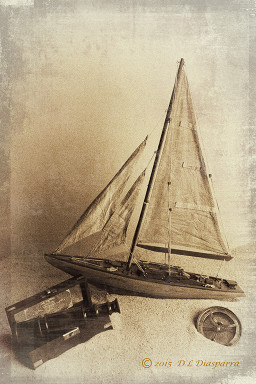
    I dreamed I was sailing a fully rigged tall ship. I felt the wind in my hair and watched the sails billowing. I was content, in control, captain of my own destiny. I picked up my spyglass and saw another vessel not too far away. That boat was sailing in sand—beached. The captain waved at me—oblivious to the that he was stuck and going nowhere. I wondered why he wasn’t conscious of his predicament and considered how I could inform him.

    Suddenly, I looked down. There was only sand beneath my ship as well, and the water was several hundred feet behind the stern. I was distracted by the other captain’s conundrum and didn’t realize my ship had left the water and was now also sailing on sand. I awoke, panicked.

    The lesson of my dream was quickly apparent: When focusing on other people and their perceived difficulties, I fail to sail my own course. Instead, I work out problems in my head that are not my own. Moreover, in my experience, people find a way through their own dilemmas. They only need a compassionate, listening friend.

    As I lay in bed contemplating my dream, I realized that both the other captain and I were confident–and had run aground. I couldn’t (and shouldn’t) do anything about his problem; however, my problem was another story.  My dream was telling me that my subconscious knew where I was stuck in life, and I was anxious to make a course correction. I grabbed a pen and began journaling. Within a short period of time, my writing revealed the problem. I said a little “Thank You” to that part of me that keeps me focused on my own issues and immediately turned my attention to the real source of my concern.

    There are several reasons we sometimes obsess on the uncontrollable. First, it is often easier caring for others than caring for ourselves. (That is especially true of me as a mother.) Second, obsessing on the uncontrollable can be a way to circumvent pain. Third, it can be a way to avoid change. Still another factor for me is my over-developed sense of empathy as a sensitive, which in many situations is a good thing, but can be taken too far.

    I learned much in this dream and writing exercise. Concern over another person is a good thing. Compassion requires it, and we need more compassion in this world.   However, if I find my thoughts turn from concern to excessive worry about people and things I have no control over, it is a red flag—an indication of the need to divert my attention to what I can control.

    To accomplish our goals in life, to stay on track, to be whole people, we need to spend time focused on our own issues and life path. I know that when I do this, I can avoid dreaming about problems with another’s ship while I overlook that my ship has run aground and I am sailing on sand.

  • Lessons Learned Playing Jacks

    Lessons Learned Playing Jacks

    I played marbles a lot in grade school. (Lost a lot of my marbles there! 😦) I learned teamwork playing first base and sometime shortstop on a girls’ baseball team in junior high. (Softball was for wimps, and we were good enough to consistently beat the boys’ team.)  But one of the most important lessons in life I learned playing Jacks.

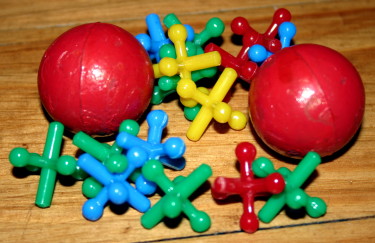
    My friends and I gathered for a Jacks-a-thon every recess on the covered cement patio outside the parish hall of our Lutheran school. We’d sit, legs folded neatly to the side. In those days, we wore dresses properly tucked to protect our modesty. (Thank God for slacks that came with feminism!) At first, we’d play with the rubber ball that came with the set at the five and dime. As time progressed, we began using golf balls, which bounced better.

    It was a quiet game, and I loved quiet—even as a kid. We broke into twos—different pairs at different times. It helped us all connect as friends, and those friendships continue today. I don’t know who was best. (Chances are if I were best, I’d remember. 😀)

    Jacks is a game that has its own built-in order and practice. First pick up one, then two, then three and so on. One can’t get to the next pickup until one finishes the last. If you missed a pickup, you started again. It’s a good game to prepare for life. Sometimes, I think too far down the road: How am I going to pick up ten? When I throw the jacks out, will they spread too far? In reality, I can only play the game in order. And when I get to the number ten, I will be practiced and ready for it.

    What I learned playing Jacks works well in my writing. I ask myself when I’m going to find time to write. How am I going to write my next chapter—define my character? What will I do to market my book? But, as in the game of Jacks, writing is done one step at a time, and if I can concentrate on today, tomorrow will take care of itself.

    “Sufficient unto the day is the trouble thereof.” That’s somewhere in the Bible. Keeping on task, not worrying about the next step, accepting mistakes and continuing on, letting the game (and life) unfold in logical order can be applied to any task in any environment. It works in small tasks like cooking, cleaning and paying bills and in large efforts like marriage, raising children, the work environment and planning for retirement.

    I only have to train my mind to stay in the moment, to pick up what I need to learn today, to let step ten be what happens another day—and nothing I need to worry about now. When I get off track, I remember those games with my friends and remind myself that life and Jacks should be played in a similar way.

  • Finding the Boost in Boredom

    Finding the Boost in Boredom

    “Boredom is the beginning of creativity,” I would tell my children when they lamented, “Mama, I’m BORED!” I would then look at them and say, “What are you going to do about it?” I would watch as they’d shift from one leg to another, roll their eyes from side to side, and finally smile—a signal that their unique natures had helped them find an interesting way to spend their time. Off they would scoot to some creative project, a good book, physical activity or simply play.

    Sometimes I think that boredom in our country is treated like a weakness. We keep our children active, involved, consumed by their activities. Much stress is put on Moms (and Dads) to carpool them to lessons in everything from piano and dancing to cooking for kids and t-ball. Parents become completely responsible for and involved in their entertainment.

    Busyness keeps kids out of trouble. But keeping them too busy robs them of the opportunity that enables the mind to know what to do now—what to do next. Of course, there is nothing wrong with organized activities. But too much of a good thing can stifle a child’s ability to entertain himself or herself. They need boredom occasionally to allow their brains to recharge and prep for the next creative challenge.

    One wonders if all of this rushing about and filling every moment with activity might not be the cause of the massive amount of stress and situational depression we suffer as a community. We don’t allow ourselves time to process our experiences on an emotional level—and learn the spiritual lessons of life. (This, of course, is different than clinical depression.) Though technology has brought wonderful things into our lives, it has also enabled us to keep constantly “in touch,” never spending quiet time alone or having a moment of boredom.

    I sometimes struggle with boredom myself. I shouldn’t. I have enough work to kill a plow horse, and I have family and friends who are always both a source of companionship and responsibility. But being bored is good for the soul. It precedes the “aha” moments in life. If that sounds impossible, think of it this way: without the empty mental space that boredom allows, nothing new and exciting can fill it. Boredom forces me to look outward, inward, resolve problems and make changes in my life–to discover that sweet spot of doing nothing.

    This approach works in my writing. The time spent “cooking” my work—in other words the time when I allow my ideas to tumble around in the back of my mind while I do nothing at all about them—is well spent.

    So, the next time your children (or your inner child) says, “Mommy, I’m BORED,” respond with “Boredom is the beginning of creativity. What are you going to do about that?” You will be pleasantly surprised at how much, if given time, your spirit can access and guide its creative nature—if it has the opportunity and permission to be occasionally bored.

  • Keep Calm and Carry On

    Keep Calm and Carry On

    KEEP
    CALM
    AND
    CARRY
    ON

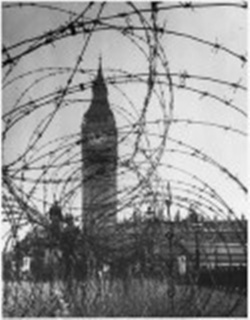
    These words were on one of several motivational posters published by the British government during World War II. The poster was simple: large-print, white letters on a red background with a crown topping the lettering. It was to be circulated upon the invasion of Nazi Germany into Great Britain. Because of luck, Hitler’s focus on Russia, or perhaps Divine protection, the invasion never occurred, and the poster was never officially issued.  It was unseen by the public until it showed up in a second-hand bookshop 50 years later.  (See:  barterbooks.co.us)

    When I first read about the history of this poster, I couldn’t help but chuckle at the stereotypical English understatement of the message in the midst of a horrendous crisis. The unfavorable odds of losing the war and potential invasion must have caused tremendous fear and uncertainty. I can imagine the British trying to stoically carry on, fetching their daily supplies, keeping a quiet, stiff upper lip while helping each other suffer the Nazi presence.

    Yet, there is great wisdom in these five little words. In today’s busy environment, we face constant manufactured and imagined crises that are poured into our heads by the competing media. It is difficult to carve out even a little time alone without beeping texts, phone calls or popups. Everyone feels pressured to be on LinkedIn, Facebook, etc. to avoid being left out. But it is important to occasionally unplug or switch off all the electronic devices. In a day when we can’t turn around without hearing the news of war, political intrigue, infighting leaders, I try to remember that we’ve been through so much before and that we will survive the present. When I feel agitated for no apparent reason, overwhelmed with life’s daily challenges, or lose sleep worrying about uncontrollable events, I recognize the need to take myself to that calm place where I can simply “carry on.”

    In order to do so, I must first let go of hearing or reading the most recent news, let go of the prying and critical media, let go of the phone, email and social obligations, let go of the needs of well-meaning friends, as well as any optional events in a demanding schedule. Second, I must embrace silence, presence with self and the Divine while I listen to my own inner voice. I spend my time quietly catching up on small things that have slipped through my cracks, enjoying my kitchen and creative cooking, allowing my muse to fill my head with the important “next” in my creative writing. For me, one of the greatest blessings in life is to focus on the daily tasks that are right in front of me. It is a reminder that my small world is all I can do anything about. It sometimes takes a day to adjust to the media vacuum, quiet, and lessening of stress. But as I do, I can finally discover that space in time where, like the British, I can “Keep Calm and Carry On.”

  • On Mothers, Daughters and Rodeo

    On Mothers, Daughters and Rodeo

    When I was a kid growing up in Tucson, Arizona, my Mom dragged me to the rodeo every few years. I could spot the dreaded rodeo grounds from a distance by the tan cloud of dust hanging in the air like a comic strip balloon:  I’m over here, ready to clog your lungs with dust, fungus, bacteria and airborne microscopic animal feces. The very sight of it made me wish I didn’t have to take another breath.

    The unpaved parking lot, covered by fine silt churned by thousands of tires over the years, had no marked spaces. This resulted in rows that meandered across the dusty field like the dry riverbeds around Tucson. My feet were magnets that attracted dust in a layer of dirt that crept up past my socks and into my pant legs. I always thought there was something in the dust that caused me to scratch my legs throughout the rest of the rodeo.

    By the time we found our seats, I was already thirsty.  We brought some water, but the dry air evaporated water from my skin faster than I took it in, and I was unable to quench my thirst for more than a few minutes.  The wooden bleachers were a dull, grey white and splintered where the wood had become weathered and dried by the hot sun. It was inevitable that my rear end would find an angry splinter looking for a victim.

    My mother would sit on the hard bleachers and scream at the bucking broncos and brahma bulls, gasp at the fabricated close calls of the rodeo clowns, grab imaginary horns and vicariously wrangle the animals to the ground.  I, on the other hand, would look at her as if she were out of her mind and dream of the moment I could leave for home and a shower.

    During the bucking bronco event, I would sit quietly, watching the poor animal try to escape the torture imposed on it in the name of  sport. Its back legs would kick and kick—eventually ridding itself of the rider.  I hoped that they would be kicked off immediately—and hard.  In calf roping, two cowboys roped the calf’s legs from both the front and back.  The poor little thing would bawl its head off as the rider threw his hands in the air to signal time and, hopefully, success.  I wondered why in the world the rodeo clowns dressed like idiots with dust-laden baggy pants, wide suspenders and painted faces to try to get the attention of an angry, snorting bull. Their jobs were to divert the attention of the bull away from the rider.

    When I look back, I realize rodeo had become a focus for the differences between me and a parent I never understood. My mother preferred friendships of men, did not like women, thought women should not be educated, liked to rough it like one of the guys, and admired men who, in my estimation, were not acceptable. I, on the other hand, was a girly girl who liked my girlfriends, wanted to be clean, read books, did well in school, wrote in my diary and preferred men who were gentle and articulate.

    When I was no longer forced to attend the rodeo, I never did again. Watching rodeo with my mother and a bleacher full of shouting groupies made me feel very much alone—and anxious to explore my own world where I could find like-minded people. To me, Mom was as much an enigma as was the rodeo, and if she had ever cared to ask my opinion, she might have thought the same of me. But she didn’t.

  • Love (and Loss) on Valentine’s Day

    Love (and Loss) on Valentine’s Day

    Valentine’s Day—a wonderful celebration for some. A day to get through—to get over—for others.  But no matter your present situation, if you have had love in your life—even lost love—it has changed you, hopefully expanded your heart, given you an even greater capacity for love.

    I first wrote this poem in 1969.  I was 21 years old.  I have “dinked” with it over the years, adding the perspective of time.  But the message is basically intact.  It speaks for itself.  I hope it helps my readers to understand that we not only need to be loved, but we also need to love others.  And each time we do, our hearts expand, making room for more love.


    Time and Loss

    Reflecting back,
    I watch time and distance recede,
    shrinking mountains
    into smooth, rolling hills
    against a brilliant sky.
    Like the leveling peaks,
    pain and loss recedes,
    releasing my mind,
    quieting that place in my heart
    reserved for you and you alone.
    Not saying that I’ll never love again,
    nor that another cannot enter in.
    But time can never take the past away.
    It cannot make the feelings felt,
    the laughter heard, the seasons shared
    pass into moments never lived,
    nor keep this heart
    from loving moments given.
    For I know in life there will always be
    a time when there was only
    you and me.

    Copyright:  Laurel Jean Becker February 13, 2014