Category: The Spiritual Path

  • Take Time to be Wholy

    Take Time to be Wholy

    The other day I read about Jean-Pierre de Caussade and his 300-year-old book, The Sacrament of the Present Moment. I found it online and felt pleased that it was available to me. In his classic of spiritual guidance and enlightenment, Caussade encourages his readers to find each moment a holy sacrament. I have yet to read the book. It should arrive shortly. However, this review reminded me of my way of making the ordinary special and listening to God in the process.

    Sometimes I discover myself skipping over the important for the urgent, hurrying to accomplish large projects at the expense of the little things that make my life feel rewarding and complete, and pushing to get everything on my “to do” list finished before I relax. At the end of the day, I am tired, anxious, anything but satisfied, realizing that I somehow missed the elusive point. It takes time to recognize that much too often, in my hurry to accomplish the urgent goals, I justify overlooking the significance of the small, ordinary tasks by saying, “You can do that later.”

    But later doesn’t come, and the seemingly unimportant things, like refilling the soap dispensers, removing and rinsing out the vegetable and fruit drawers in the refrigerator before putting more into them. or straightening a cluttered drawer remain undone. I put these 5-minute-or-less tasks off until later—and later—until I awake one day and observe the unaddressed piling up around me— in every direction—and it gets me down.

    At this juncture I remember what to do. I sing an old hymn from my childhood: “Take Time to be Holy.” The song’s immediate effect? Relaxing and decelerating me. Now noticing what is right in front of me, I apply myself to each task presented. The second phrase of the hymn is, “Speak oft with thy Lord.” While focusing on the small but important tasks, I converse with Him about anything that comes to mind and needs to be addressed— from my own life purpose and spiritual awareness to the needs of others. Singing the old hymn while doing these little tasks becomes my leap to engagement with my emotional and spiritual life.

    God shows me that healing becomes available in the work of the moment. In slowing down I grasp that I have been hurrying in order to avoid engaging with myself and my creator. Perhaps a slight from a stranger or, worse yet, from someone close needs to be dealt with. Perhaps I need to confront a painful memory or loss that is fueling my hurried state. Details have been pushed aside in order to avoid a grief that is welling up inside of me. Hurrying in order to escape emotional issues enables me to trick myself into thinking that a hurt does not exist or an emotional/spiritual task need not be dealt with.

    So, I slow down, sing my self-instruction song, and find peace in dealing with whatever task is in front of me at the moment—physical, emotional or spiritual. In doing so, I find my sacrament in the ordinary while taking time to be holy, speaking with my Lord and giving Him the opportunity continue to make me whole.
  • The Gift of Christmas

    The Gift of Christmas

    Today, Christmas day, I am delighted to be sitting on my couch reading articles and getting ideas on baking and decorating for next Christmas from Victoria Magazine.  (Yes, I am a planner.) It is a peaceful morning with houseguests and husband snug in their beds.  This year the weather is not cooperating with my romantic ideal of at least two inches of snow.  However, the morning sun radiating through the window behind me is welcome.

    As a Christian, I celebrate Christmas from both a religious and secular perspective.  The house is filled with greenery, two trees, candles and many Santa Clauses.  On the hearth, an elf doll peddles a metal tricycle. On the piano is a white china nativity with each figure edged in gold.  The living room table holds a statue of Mary and Joseph kneeling, he with his arm around her and both holding the baby Jesus.  Unlike the gold-trimmed china nativity, this simple, brown statue expresses the humanity of Jesus and his ordinary life with his parents.

    One way I celebrate Jesus’ birth is by giving presents to my family and baked goods to friends and neighbors.  This is all well and good, but this year I felt a need to give a gift to Jesus. After all, it’s his birthday—not ours. Whether in a religious context or not, Christmas celebrates the birth of a carpenter who walked this earth for 33 years, cared deeply for the poor and disenfranchised, lived a life of sacrifice for others, and changed the world.  This is Jesus birthday party. What gift would be appropriate for his birthday?  Family and friends suggested a few organizations that help those in need.

    But I give to charities throughout the year.  I want to give something different—and special. Then, a few days ago, with thoughts of giving occupying my mind, it occurred to me that Jesus is the gift.  I need only to be a good receiver with a grateful heart–that is my gift to Him.  This thought put a different perspective on Christmas this year. It reminded me that giving to each other is not just an exercise in commerce-driven spending, but a passing on of the generosity that resonates with the original gift of Christmas.

  • Blowing in the Wind

    Blowing in the Wind

    My daughter recently told me that on her way to work she noticed a caterpillar on a too-long strand trying to weave a cocoon in the wind, causing it to struggle. The image of that cocoon shifting in the wind kept popping into my head, perhaps because I’ve felt very much like it lately—the winds of life whipping me one way and then another: uncertainty in my future direction, inability to keep a pace I would wish to, not hearing my own voice amidst the cacophony of others’ voices, and worst of all, the wind of fear that I won’t settle. All this while I work to spin a cocoon that will protect me from those very winds and allow growth. But my strand is also too long, and I am vulnerable. I need to shorten the strand between the sources of my security and me.

    A major source of that security is my faith. I can’t speak for others, but without God’s voice in my ear, the future feels bleak and my past losses overwhelming. He has purpose for my life, and in order to meet that purpose, I need to stay close to Him. My primary connection strand is prayer—not so much a formal exercise as a constant conversation. My creativity, direction, and voice hinge on His creation, and the image of that caterpillar reminds me to keep the strand of prayer strong and attached close to Him.

    From the day we are born, we need human connection. It’s the way I’m wired and a source of security for me. Unless I give and receive support from family and friends and share burdens, getting through this proverbial vale of tears feels impossible. Both the sharer and receiver are blessed by the connection experience. Friends have seen me through devastating days and celebrated with me through joy-filled days. My hope is that they feel the same. I must continue to nurture those connections.

    As I get older, the significance of my connection to nature grows clearer. It resounds in my writing and becomes a source of understanding myself. When my daughter informed me of her long hours at work, I reminded her of the advice her grandfather gave me: “Don’t forget to smell the flowers.” Dad reminded me that the lessons in nature require me to slow down long enough to take notice, learn and enjoy. Unlike most Coloradoans, I am not particularly an outdoor person; however, I must again make the effort to keep my connection to and appreciation of nature strong.

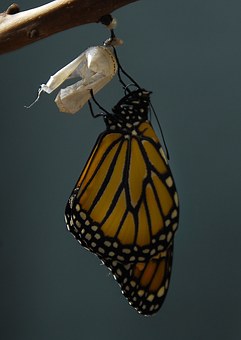
    I’m privileged to have an encouraging and accommodating husband, as well as children and grandchildren. Some years back, when the kiddos were preparing for college, I wrote the following poem. It speaks to the mother/daughter connection, considered the most complicated. I compared her growing process to the evolution of a caterpillar to cocoon and butterfly.

    Daughter

    A swiftly-evolving future butterfly,
    you had no choice
    but to shed your too-small skin.
    It hurt, but new lived where
    old gave way and, nearly grown,
    you wove your soft blanket
    into a hard, brown shell.
    Clinging with one thin, silk strand,
    you stubbornly attached
    to the mother stem.

    Inside, you changed,
    melting down to a formless state
    where all new things begin again,
    unnoticed until the world
    would see you fly.
    Shaping silently in the cocoon,
    you tossed and turned,
    keeping time
    with your own nature
    until the day you came forth.

    Bold wings took hold,
    strong and colorful,
    carried you over the winds of time,
    until you landed
    just outside my window.

    –Laurel Jean Becker
    Copyright 9/5/97

    I now feel like the caterpillar needing to melt down, reform and redirect—not an easy process. But I know if I keep my vital connections strong, I will eventually find my wings again.

  • Barren Branches

    Barren Branches

    I glanced out my window at a beautiful sky. The sun was setting and the combination of cloud effect and angle of rays brought a rose softness to everything—as if the air itself were tinted. I went outside to experience the beauty. Rolls of clouds wound from one end of the sky to the other and one behind the other, like waves on a beach, acting as prisms to the light from the sun.

    Gazing up, I noticed the barren tree limbs plastered black against mauve and pink clouds. Not a leaf. Not a bud. No sign of life—as if they were forever dead. The contrast took my breath away. I wish I identified with the colorful sky and warm air, but truth be told, I felt like the barren branches reaching for the light. Shortly, everything returned to the usual dusk grey and the branches blended into the sky. For the rest of the evening and ever since I’ve been unable to shake the image of the tree limbs against the colorful clouds, knowing it held a message for me: an internal awareness of my own barrenness and the spiritual life I missed and yearned for.

    The last few weeks, my days have been full of deadlines: speaking engagements and the necessary preparation, the effort to keep up with the bare minimum in my home obligations and financial responsibilities, book signings and media marketing. These opportunities make me feel blessed, but I miss writing, prayer and meditation time—and puttering around my home. When I lose my spiritual and creative rudder, I am disengaged from my Creator and myself.

    There is only one thing to do: find my balance again and rededicate my days and time to God’s will for my life. Not that I discontinue speaking and marketing. However, I need to daily set aside time to empty my mind of pressure and open it to God’s voice. It strikes me that I often go through this process. Every few months since my latest book, I find myself untethered, and something like the barren branches comes along and reminds me to slow down and reconnect—this time not only on a creative but also a spiritual level.

    While writing this, an image of a leaf-filled tree and bright sunshine entered my head and left as fast as it came. Leaves appeared on my mental branches–a signal to myself that I am on the right track. I must judiciously nurture both my creative and eternal self.

    Experiencing the beautiful sky and warm colors leaves me feeling grateful; but I am also grateful for the empty branches and the stark contrast they bring to the picture. Without the one, I would not have noticed the other. It’s funny, isn’t it, how we learn a great deal from the experience of contrast. This contrast is a gift—a reminder of the necessity of regaining my balance and leafing out my barren branches.

  • A Star Atop My Christmas Tree

    A Star Atop My Christmas Tree

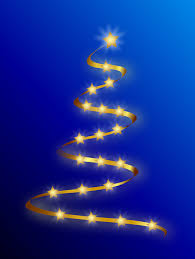
    This concrete poem expresses how I feel about this Holy season.  My faith in God and His peace, family and you, my friends, are all a blessing in my life and part of the base that holds it all up.   I am grateful for each and every one.


    Copyright October 20, 2010
    Laurel Jean Becker
  • God and Life’s Rough Places

    God and Life’s Rough Places

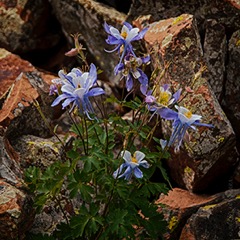
    Photography by Deb Diasparra, www.diasparraphoto.com. Used with permission

    “It’s all a part of God’s plan.” “Everything happens for a purpose.” These are sayings we rattle off to each other when things go wrong—when someone is ill, dies, loses his job or even when someone’s brain malfunctions and he kills randomly.

    Does God have a plan for my life? I believe He does. Does he have a purpose for my life? I am certain he does. But I’m not convinced that everything negative that happens to me— physical or mental pain, horrendous accidents, heart breaking loss or brutality—should be interpreted as something God planned. I’ve heard this said in hospitals, at funerals, etc., as a way to rationalize events. I think it can be perceived as devoid of compassion—even though it may not be meant that way. Does it help the lost? Grieving? Injured? I rather think it strips them of what they need most to recover: trust in God.

    How does one trust in a God who has turned on you or is less interested in you as a person than in using you to achieve some existential plan? At least that is the effect these statements have on me—and I suspect on some others. I imagine people of all faiths struggle with this.  Calling every event a part of God’s plan and purpose may also be a way to blame God for all the hardship or evil in the world. But does it acknowledge the presence of evil that has nothing to do with Him? We have free choice, and some people make evil choices.

    This has special meaning for me personally. I suffered from a painful, abusive childhood and have taken a lifetime to recover from those events. I don’t believe God planned them. It was God who lifted me out of that world and placed me in the loving place I now occupy. His love has carried me through my pain, and His love will eventually take me home.

    The truth is, even though I am a follower of Christ, Jesus doesn’t promise me a life without pain and loss. Rather, He promises me His presence with comfort, hope and grace. Jesus said he would be with us always—to the end of the world (Matt 28:20 ). I personalize that to mean the end of my world—my time on earth.

    Is the pain in my life part of His plan? I think not. Perhaps I’m wrong; I’m not a theologian. I don’t have all the answers. In my morning prayer, I give my day over to God and His will for my life and let go of my concerns and let God help me through them. I don’t hold Him responsible for everything that might go wrong.

    However, I can discover purpose in all things. For example, in loss, I can give purpose to pain by helping others with similar experiences. A brutal world can motivate me to be kinder and gentler within my family and community. Any anger in my loss can be directed to implement change–both in myself and in my world. The pain I suffer in this life can define me for the better or worse. Much of that is up to me.  I am convinced we can find purpose in all that happens—even the devastating things that are not from God.

  • A Princess Among The Many Peas

    A Princess Among The Many Peas


    In The Princess and the Pea by Hans Christian Andersen,  a woman who claims to be a princess cannot rest because a pea that has been placed below the twenty mattresses she is sleeping on feels uncomfortable and keeps her awake.  According to the story, this level of physical sensitivity is a sure indication that she is a princess.

    When I was very young and first read The Princess and the Pea, I immediately identified with the princess–not because I was a light sleeper, felt entitled or was looking for a prince to rescue me, but because I was a clairvoyant and empathized with her sensitivity. I could perceive things others could not.

    Science could not (and still cannot) prove extrasensory perception ESP/clairvoyance, and the conservative church I grew up in historically disapproved of it. Church teachings indicated my “gift” was suspected as a tool of the devil. (I doubt that it occurred to my church leaders that their gifts could be used for evil ends, too.) What could a clairvoyant child do in such an environment? I simply tucked it away to investigate later and remained anchored in my own lonely reality.

    In time and with maturity, I came to recognize and understand my unique abilities: foreseeing events before they occur; seeing things that are happening elsewhere; observing auras; viewing things that happened in the past, and other clairvoyant experiences. I grew to understand the limits of religion and embrace the reality of my own Christianity and spiritual situation. I gave my ESP/Clairvoyant abilities into the control of God through prayer. I would trust Him with what He had entrusted to me.

    Most of what I experience cannot be shared, which sometimes leaves me isolated—until what I know becomes common knowledge. Revealing my clairvoyance has made me a target of various reactions ranging from acceptance to outright anger and the inevitable judgmental attitude. Because of that, what I experience sometimes leaves me feeling vulnerable.  However, it is important to be true to my authentic self.

    I now embrace my clairvoyance as a part of me that I nurture, love and respect. It sometimes remains hard to sleep when my sensitivities discover the “pea” of clairvoyance. No wonder I identified with the princess!  I wrote the sonnet below to put words to both the clairvoyant experiences and God’s eternal grace toward my clairvoyant self.


     Mist and Mysteries

    I sit atop a crest, a treeless bend,
    and let my eyes roam over valleys low.
    I’ve climbed the rugged trail alone again
    and come to talk to you in clouds, my soul.
    I hear the world’s voice and feel my head
    recoil itself from static noise once more,
    until it dies away, an echo shed.
    I feel the breezes from a distant shore.
    They lift me and carry me aloft
    toward clouds of mist and mysteries untold.
    I sense with ears that do not hear a word
    and touch with hands my eyes cannot behold.
    I feel Your presence permeate this space
    and brush the timeless nature of Your grace.

    Previously published:
    Parnassus Literary Journal, Vol. 28, No2, Summer 2004
    The Pen Woman, September 2006
    In the Heart of a Quiet Garden, 2013– Finishing Line Press

  • Of Branches and Twigs

    Of Branches and Twigs

    Oh no! I thought as I opened our curtain to a world of white. Unlike in other parts of the country, April snow is not unusual in Colorado. But my husband and I had just returned from Texas, and I was not anxious to slop through the wet snow to refill my fridge.

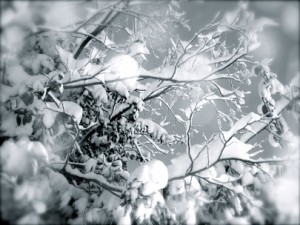
    As I watched the dark sky brighten, I felt this particular morning was somehow unusual. I wasn’t sure why. Perhaps it was the pristine scene of the still snow not yet disturbed by humans or cars. Then the leafless Mountain Ash outside my window caught my eye. Its branches extended from the strong trunk to smaller branches, no more than several inches thick, and trailed off to twigs only a quarter inch thick. Each was holding at least its width in heavy, wet spring snow.

    I called my husband to the window. “Why is something so fragile able to uphold such heavy snow?” I asked. “Because,” he said using his ability to see things from an analytical perspective, “there is no wind.” He was right! I knew instantly what had initially caught my attention was the stillness.

    I began to think about the slender twigs at the branches’ ends and the burden they held. Like the twigs on Mountain Ash, there are many fragile people among us: people who have little strength or are physically or emotionally thin. Yet, they still contain the life that will spring forth when their winter burden is over and the first Crocus of spring pops through the snow. Hopefully, like the Mountain Ash, the fragile in our world will leaf out and become stronger as seasons pass and their branches thicken and reach upward.

    The survival of we fragile human beings depends on many things, two of which are our connections to others who can help us survive and the absence of a wind of crisis that is too strong and can break our entire branch from the tree.

    The snow began to fall again, and I wondered how much more the thin twigs could hold. A question popped into my mind: Does God really give us only what we can handle? I’ve heard that cliché all my life with the same response: anger at the trite statement that people intend as comfort for others—or to reassure themselves. To me, and I suspect many, it is not comforting. In truth, I’ve seen how life has given some more than they can carry, and they end up like broken branches laying on the ground. I know for myself that He has often given me too much to carry without Him—and perhaps that is the point.

    The fragile people in our world, the human twigs that are able to survive two or more times their width of life’s burdens, are as much to be admired as the strong human trunks and thick, sturdy branches that can carry more snow. All the necessary parts of the human tree touched my heart that morning. At any given time, I may be either the trunk, a branch or the twig. I am happy to be any part of the tree and can appreciate the weak and the strong in both others and myself.

    I no longer dreaded the trip to get groceries. Instead I was grateful for the reminder of the human condition that this snow-laden tree had brought to mind. I smiled, turned from the window and began my day.

  • Broken Mugs

    Broken Mugs

    On my way to meet with my writing group, I grabbed my favorite travel mug—the one with a broken handle. The picture of a skull with a broken jaw immediately popped into mind. Oh yeah I thought and began laughing. I’m working on a murder mystery, and there’s no telling where the mind will travel when it’s cooking a mystery.

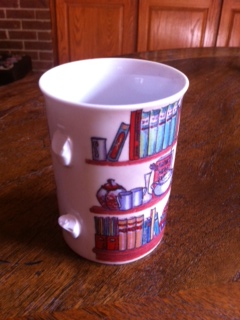
    Back to the broken mug. It’s the one with pictures of bookshelves on it. I love the warm color of the books wrapped around it and the way it feels in my hand—tall, narrow and lightweight—easy to hold. A thoughtful friend bought it for me, and I liked it so much I immediately went out and bought three more. Over the years, only two have survived—one minus a handle.

    Which brings me to the point.  Broken can sometimes be a useful state.  What makes my broken mug better? Without the handle, it fits in my car’s cup holder. As I drove across town, I continued to mull over the cup and the metaphorical usefulness of being broken.

    Practically everyone I’ve known has suffered tremendous loss: death of children, spouses, parents; divorce; loss of jobs, homes and security; and ill health. Let’s face it, life is full of potential for loss, and by the time we’re older most of us have accumulated a considerable amount.  God does not cause the pain in this world.  Life does.  However, as with my useful mug, God can engage our broken hearts constructively—to help others, to teach us, to help us understand our need for Him.  II Corinthians 12:9 reminds us: “My grace is sufficient for you, for my power is made perfect in weakness.”

    My first heartbreak came in childhood, but I’ve had a few since then, too. Sometimes I’m grateful for brokenness—but not all the time. If I am occasionally inclined to wail, “Why me?” I remember what I learned from a friend and remind myself, “Why NOT me?” I don’t know anyone who hasn’t suffered events that left them broken (and sometimes bitter)—at least for a while. Hearts can become bitter or hardened if we’re not careful. Someone once told me that hardening of the heart could age people more quickly than hardening of the arteries. I’m not sure if that’s true, but it’s an interesting idea.  We must work to keep our hearts open by dealing with our brokenness, and the emotional fallout, using a constructive, healthy approach. Still, wouldn’t most of us rather be 100% whole all of the time? I know I would!

    Though life can be difficult and painful at times, purpose and growth can be found in the pain, and much resilience and perseverance in carrying on. Plus, there is gratitude for the broken mug—and broken heart—that sometimes is a better fit. Just like my broken mug fits better in my car’s holder, I know my broken heart fits better into the human community and my Life Holder’s plan.

  • Early Morning Moon

    Early Morning Moon

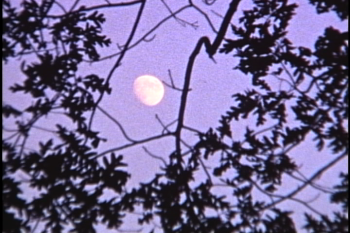
    Strange is my first thought as I draw open my west-facing curtains. I never expect to see the full moon at sunrise. But there it is shining through an early morning mist that clings and runs like tears along the leaves and through the blades of grass. A comforting verse suddenly runs through my mind: “…weeping may endure for a night, but joy cometh in the morning.” (Psalms 30:5)

    The sky is grey—like it is just after sunset when dusk begins to set in. But this sky is on its way to sunrise. The full moon’s job of lighting the night sky will be complete when the sun’s brightness dismisses it with, “Good job. My turn now.”

    It is always a surprise, after a long and difficult night, to open the curtains of my mind and find this symbol of hope and know the sun’s brilliance will relight my life.  Frozen at my window, I continue to gaze at this beautiful moon. I am reminded that it is just a reflection. It is not the original source of light. In the midst of this night’s darkness, the sun is still trying to help—if only in a reflective way.

    When life throws me off course and robs me of my peace, I can still know that God is present with me as He promised—that there is hope for the future morning. I see His reflection on the faces of friends and my family, feel it in their arms around my shoulders and hear it in the voices of comforters sharing my burdens.

    The gift of God’s continued presence, His reflective light, is still there, although there are times, as in this moment, that I can only see dimly through the mist.  I am grateful for the message of this early morning moon.  It reminds me to  stand firm in the knowledge that, with time, the mist will lift, His provision will become more visible and the night will give way to “joy in the morning.”